GAI
Technology

12. Claude Code in 2025

Highly Agentic Command Line Application for Professional developers

Artificial Intelligence Data Science Web Development

My Journey with Claude Code: Transforming Development Workflows 🚀

After completing the Claude Code course on DeepLearning.AI, I wanted to share my personal experience and key takeaways from this transformative learning journey. This review reflects my own insights and experiences with the tool. 🎯

Why This Course Caught My Attention 🎨

As an intermediate developer who loves command-line efficiency, the promise of “learning prompts instead of commands” immediately resonated with me. The course delivers on this promise and much more.

My Key Learnings Breakdown 📚

Easy Skills: The Foundation 🏗️

🔹 Simplicity Wins My biggest surprise? Simple one-line prompts consistently outperformed my initial complex instructions. This taught me to communicate intent clearly rather than over-specifying steps.

🔹 Visual Debugging Magic 📸 The screenshot processing capability genuinely changed how I approach debugging. Instead of lengthy issue descriptions, a simple screenshot gets targeted solutions.

🔹 Privacy-First Architecture 🔒 For enterprise work, the local codebase search feature provides peace of mind while maintaining AI assistance capabilities.

🔹 GitHub Integration 🐙 The seamless GitHub workflow integration feels like having a dedicated code reviewer available 24/7.

Medium Skills: Full-Stack Mastery 💪

🔹 Memory with CLAUDE.md 🧠 Learning to leverage persistent memory across sessions transformed my long-term project workflows.

🔹 Complete Development Cycles ⚙️ The course taught me to think beyond code generation—Claude Code orchestrates entire development workflows autonomously.

🔹 One-Command Web Apps ⚡ Creating functional applications with single commands still feels like magic, even after completing the course.

🔹 Data Science Superpowers 📊 The dual-output capability—Jupyter notebooks AND Streamlit dashboards—is a game-changer for data scientists. The high-quality visualizations and built-in debugging support streamline the entire analysis-to-deployment pipeline.

🔹 RAG Implementation 🔍 Complex retrieval-augmented generation systems became approachable through guided implementation patterns.

Advanced Skills: Development Acceleration 🏎️

🔹 MCP Integration 🔧 Learning Model Context Protocol connections opened up possibilities I hadn’t imagined for tool integration.

🔹 Parallel Development with Git Worktree 🌿 The “4-in-1 developer” experience through advanced Git workflows, including automatic merge conflict resolution, revolutionized my development approach.

🔹 Figma-to-NextJS Pipeline 🎨➡️💻 Transforming Figma mockups directly into functional NextJS applications bridges the design-development gap more effectively than any tool I’ve previously used. The Figma MCP server integration makes this workflow seamless.

🔹 Playwright MCP Server 🎭 Automated testing capabilities through Playwright integration ensure application reliability with minimal manual effort. The Playwright MCP server handles complex web automation scenarios.

🔹 Real-World Data Integration 🌐 Claude Code’s ability to handle API integrations, data transformation, and presentation layers seamlessly impressed me throughout the course.

Personal Impact Assessment 📈

Productivity Gains: 🚀

  • Development speed: ~3-4x faster for new projects
  • Debugging time: ~60% reduction
  • Testing coverage: Significantly improved with automated approaches

Workflow Changes: 🔄

  • Shifted from imperative to conversational programming
  • Adopted autonomous development patterns
  • Integrated AI assistance into every development phase

Skill Development: 📖

  • Enhanced prompt engineering capabilities
  • Better understanding of AI-assisted workflows
  • Improved full-stack development patterns

IDE Integration Experience 💻

For developers preferring familiar environments, the VSCode integration provides Claude Code’s full power within a traditional IDE. This significantly reduces the learning curve while maintaining all capabilities.

Real-World Applications 🛠️

Since completing the course,it will help in enhancing my projects related to :

  • Enterprise Projects: Privacy-respecting code analysis and improvement ✅
  • Data Analysis: End-to-end pipelines from Jupyter to production dashboards 📊
  • Web Development: Rapid prototyping from design to deployment 🌐
  • Testing Strategy: Comprehensive automated testing implementation 🧪
  • DevOps Workflows: Integrated CI/CD pipeline management ⚙️

The Jupyter Notebook + Streamlit Magic 🪄

One of the standout features that deserves special mention is Claude Code’s ability to create Jupyter notebooks with high-quality visualizations while simultaneously generating Streamlit web dashboards. This dual-output approach means your data analysis is immediately ready for both exploration and production deployment, complete with debugging support.

Looking Ahead 🔮

This course introduced me to what feels like the future of software development. The high agency autonomous coding capabilities represent a paradigm shift from traditional development tools.

For developers ready to embrace AI-assisted workflows, this learning experience offers practical, production-ready techniques that deliver immediate value.

My Recommendation 🌟

Ideal for:

  • Intermediate to advanced developers 👨‍💻
  • Command-line enthusiasts 💻
  • Data scientists seeking workflow automation 📊
  • Teams exploring AI-assisted development 🤝

Course Highlight: The practical, hands-on approach ensures you’re implementing real solutions, not just learning theory.

Final Thoughts 💭

The Claude Code course on DeepLearning.AI transformed how I approach software development. It’s not about replacing developers—it’s about amplifying human creativity through intelligent, autonomous systems.

The future of coding is conversational, and this course provides an excellent roadmap for mastering these emerging capabilities. 🚀


This review represents my personal learning experience with the Claude Code course. All course content and methodologies are credited to DeepLearning.AI. Course details and enrollment information can be found on their official platform.

Technology

11. Content Creation in 2025

Create Content better and faster with AI tools

Artificial Intelligence Learning Future Tech

🌟 AI Content Creation Tools – July 2025

✨ Build Better, Smarter, Faster (Without Feeling Overwhelmed)

AI is the rage in the tech world in 2025. There are new products being launched in the market every day. Content Creators need to adapt to rapidly advancing AI technology. They can create pure AI , mixed content or enhance human generated content rapidly with these new tools. They enhance or complement the traditional content generation tools. Note that these tools are based on what i have tried and tested. It could be totally different for someone else.

Use this guide to build content with AI, without breaking your flow.
Sorted by goal, filtered for free-first, and upgraded for pro creators.


🧭 Not Sure Where to Start? Try This:

If you want to…Start with this free combo
Make short music videosSuno + InVideo + VEED.io
Create study explainersMathGPT + Pika + Canva
Launch faceless contentChatGPT + Heygen + ElevenLabs
Generate YouTube scriptsClaude + ChatGPT
Learn to code & teach itDeepSeek + Replit + Claude Code

🎯 Start with just ONE combo. Add more as you grow.


🆓 Top Free/Freemium AI Tools for Creators

🎶 Suno

Generate music with prompts.
Ideal for background beats and short-form videos.

🎬 InVideo

Script → video editor with AI + templates.
Great for TikTok, Reels, educational clips.

🖼️ Pika

Image → animated video.
Make still posters come alive.

🤖 ChatGPT (GPT-4o)

Write scripts, prompts, storyboards, captions.

📚 Claude

Organized writing, long-form editing, and structure.
Free tier available.

🔣 MathGPT

Visualize math concepts, along with physics, chemistry and accounting.
Perfect for academic content and tutors.

🗣️ Heygen

Script → talking AI avatar presenter.
Use for faceless educational or business content.

🎙️ ElevenLabs

High-quality voiceovers in any tone at a decent price.

🧠 Manus AI

AI writing assistant with research focus and long form content. Great for academic, business, and research content.

💻 DeepSeek

Generate technical or research-focused content + code.

🌏 Qwen on Hugging Face

Multilingual open-source AI for research, code, and text generation.


🧰 AI Workflows for Viral Short-Form Content

🎵 Music Shorts (Zero-Cost Stack)

Suno + ChatGPT + ElevenLabs + InVideo

  • Music by Suno
  • Script by ChatGPT
  • Voice by ElevenLabs
  • Edit using InVideo

🎯 Best for Reels, Shorts, Motivation Videos


📚 Study Explainers

MathGPT + Pika + Canva or DaVinci Resolve

  • Solve + explain with MathGPT
  • Animate scene with Pika
  • Polish with Canva (text/graphics)

🎯 Best for TikTok study channels, Instagram educators


🧑‍🏫 Faceless Course Videos

ChatGPT + Heygen + ElevenLabs

  • Script with ChatGPT
  • Voice with ElevenLabs
  • Avatar with Heygen

🎯 Perfect for training, selling digital products


💼 Premium Tools for Pros (Paid / Invite Only)

🎥 Sora (OpenAI)

Ultra-realistic, prompt-based video generation.
Still invite-only. Ideal for brand ads or cinematic explainer content.

🎞️ Gemini Video (via Google Studio)

Turn ideas into animated scenes with voiceover + visuals using Gemini Veo 3 Used for Google Ads, YouTube, and Shorts.

🧪 Deep Research (ChatGPT Pro)

Summarize complex research + citations.
Great for deep video essays, thesis prep.

🧑‍💻 Claude Pro

Handle long code, documents, and technical editing.
Unlocks powerful dev workflows.

🧠 AI Agents (OpenAI)

Create specialized assistants: write, code, edit, search.
Pro users only, via GPT-4o with tools.

💻 Replit Ghostwriter

AI code editor with live preview + deployment.
Best for app demos, full-stack learning content.


🔍 Bonus Tools & Marketplaces

🧭 There’s An AI For That

Search 10,000+ AI tools by task (e.g., “create music” or “edit video”).

🤖 AI Agents Directory

Browse and deploy purpose-built agents (e.g., legal, research, writing).


🧘 Final Tip: Just Start with one workflow

⚠️ Don’t try every tool. Try one goal-driven combo for 1 week.
Then tweak, remix, or upgrade. Create something that users love, avoid AI slop.


📌 Summary: Best Combos by Goal

Use CaseFree StackPremium Upgrade
Music Video ShortsSuno + InVideo + VEEDSora (Invite Only)
Study/Math ExplainersMathGPT + Canva + PikaClaude Pro
Faceless TutorialsChatGPT + Heygen + ElevenLabsAI Agents
Research YouTubeClaude + ManusDeep Research (OpenAI)
Coding ChannelDeepSeek + ChatGPTReplit Ghostwriter + Claude Pro

Technology

10. Artificial Intelligence in Finance in 2025

Open Source Artificial Intelligence resources ni FInance in 2025

Artificial Intelligence Miscellaneous Review

Pioneering FinTech Solutions in 2025: Harnessing Open Source Innovations

The financial landscape in 2025 is undergoing a profound transformation, driven by a surge of AI-driven innovations and the rise of open-source technologies. Platforms like FinGPT and OpenBB are at the forefront, offering tools that revolutionize finance by combining robust datasets with intelligent architecture. This article delves into the exciting possibilities and challenges of leveraging these open-source libraries to create the next generation of financial tools.

FinGPT: Revolutionizing Financial Language Models

FinGPT, a product of the AI4Finance Foundation, harnesses the power of Financial Large Language Models (LLMs) to deliver deep insights into financial data. Its capabilities extend beyond simple data processing, enabling nuanced understanding and analysis of complex financial documents, trends, and forecasts. By integrating FinGPT into FinTech solutions, developers can:

  • Enhance Predictive Analytics: Use LLMs to predict market trends based on historical data.
  • Automate Report Generation: Automatically generate detailed financial reports, saving time and reducing errors.
  • Personalize Financial Advice: Offer tailored financial advice by analyzing client behavior and preferences.

The AI4Finance Foundation offers a comprehensive platform that includes various machine learning algorithms, making it an invaluable resource for developers seeking to implement advanced financial models with ease. Its open-source nature ensures accessibility, customization, and continual improvement by a vibrant community of innovators.

FinNLP: Sentiment Analysis for Informed Decision-Making

In an era of information overload, FinNLP provides a critical advantage by analyzing sentiment from social and news media. This tool helps financial institutions understand market sentiment and make informed decisions. Key applications include:

  • Risk Management: Identify potential risks by monitoring negative sentiment around companies or sectors.
  • Investment Strategies: Develop strategies based on market sentiment.
  • Crisis Detection: Detect early signs of financial crises through sentiment shifts.

FinRL: Reinforcement Learning for Trade Automation

FinRL employs Reinforcement Learning (RL) to automate trading decisions, adapting to real-time market changes. Its applications in FinTech include:

  • Algorithmic Trading: Develop sophisticated trading algorithms that learn and evolve.
  • Portfolio Management: Dynamically optimize portfolio allocations based on market conditions.
  • Risk Assessment: Continuously assess and adjust for risk, improving investment outcomes.

FinRobot: The Future of AI Agents in Finance

FinRobot represents the next wave of AI-driven automation, offering personalized financial services through intelligent agents. These AI agents can:

  • Provide Real-Time Support: Offer customers real-time assistance and financial advice.
  • Automate Routine Tasks: Handle routine financial tasks, freeing human resources for more complex activities.
  • Enhance User Experience: Improve the user experience through seamless, intuitive interactions.

OpenBB: Streamlined Financial Analysis

OpenBB provides a powerful terminal with a user-friendly interface designed to streamline financial research and analysis. It focuses on visualization and research, offering an intuitive platform for users to connect and display personalized data efficiently. Key features include:

  • Data Integration: Effortlessly connect and display personalized data.
  • Enhanced Research Tools: Utilize built-in tools for in-depth financial analysis.
  • Copilot Functionality: Leverage AI to analyze financial data and provide insights.

While OpenBB is tailored for visualization and research, it complements the AI4Finance Foundation’s broader platform by serving as an accessible entry point for financial analysts and researchers.

Challenges and Considerations

  • Despite its advantages, OpenBB requires some initial manual setup, such as configuring screens for optimal use. However, once configured, it significantly enhances research efficiency and data visualization.

  • Intergration with mobile or web platforms with MLOPs and production is a challenge for AI4Finance projects.

Accessing Quality Data: Numerai’s Distributed Hedge Fund

Numerai offers clean, high-quality datasets, essential for developing robust financial models. By participating in Numerai’s distributed hedge fund, developers can:

  • Access Diverse Data: Use diverse datasets to train and test financial models.
  • Collaborate on Predictions: Work collaboratively on predicting market movements.

Leveraging Multimedia for Learning: Quantlab’s Hindi-English YouTube Channel

For those seeking to deepen their understanding of FinTech and quantitative finance, the Quantlab YouTube channel provides a rich resource. Offering content in both Hindi and English, it bridges language gaps and makes complex financial concepts accessible to a broader audience.

Conclusion: The Future of FinTech in 2025

As AI agents become the norm in 2025, platforms like FinGPT, FinNLP, FinRL, and OpenBB are setting the stage for a financial revolution. These tools democratize access to advanced financial analytics and empower developers to create innovative solutions that were once unimaginable. By embracing these open-source platforms, the FinTech industry is poised to achieve unprecedented growth and efficiency, paving the way for a smarter, more responsive financial ecosystem.

The ease of use and open-source nature of these tools mean that developers of all levels can join this financial revolution. With platforms designed for everything from visualization to comprehensive machine learning, the future of finance is more accessible and dynamic than ever before.

References

FinGPT, FinRL, FinNLP and FinRobot

https://ai4finance.org/

Code Repo

https://github.com/AI4Finance-Foundation

Bloombergy Terminal Alternative

https://www.openbb.co/

Data sets from a distributed Hedge Fund

https://numer.ai/

Youtube channel in Hindi/English

Quantlab

Technology

9. Artificial Intelligence in 2025

Learning Artificial Intelligence in 2025 from different online resources

Artificial Intelligence Computer Vision NLP

Note: The resources and learning steps in this article are listed in reverse chronological order, from the latest to the earliest.

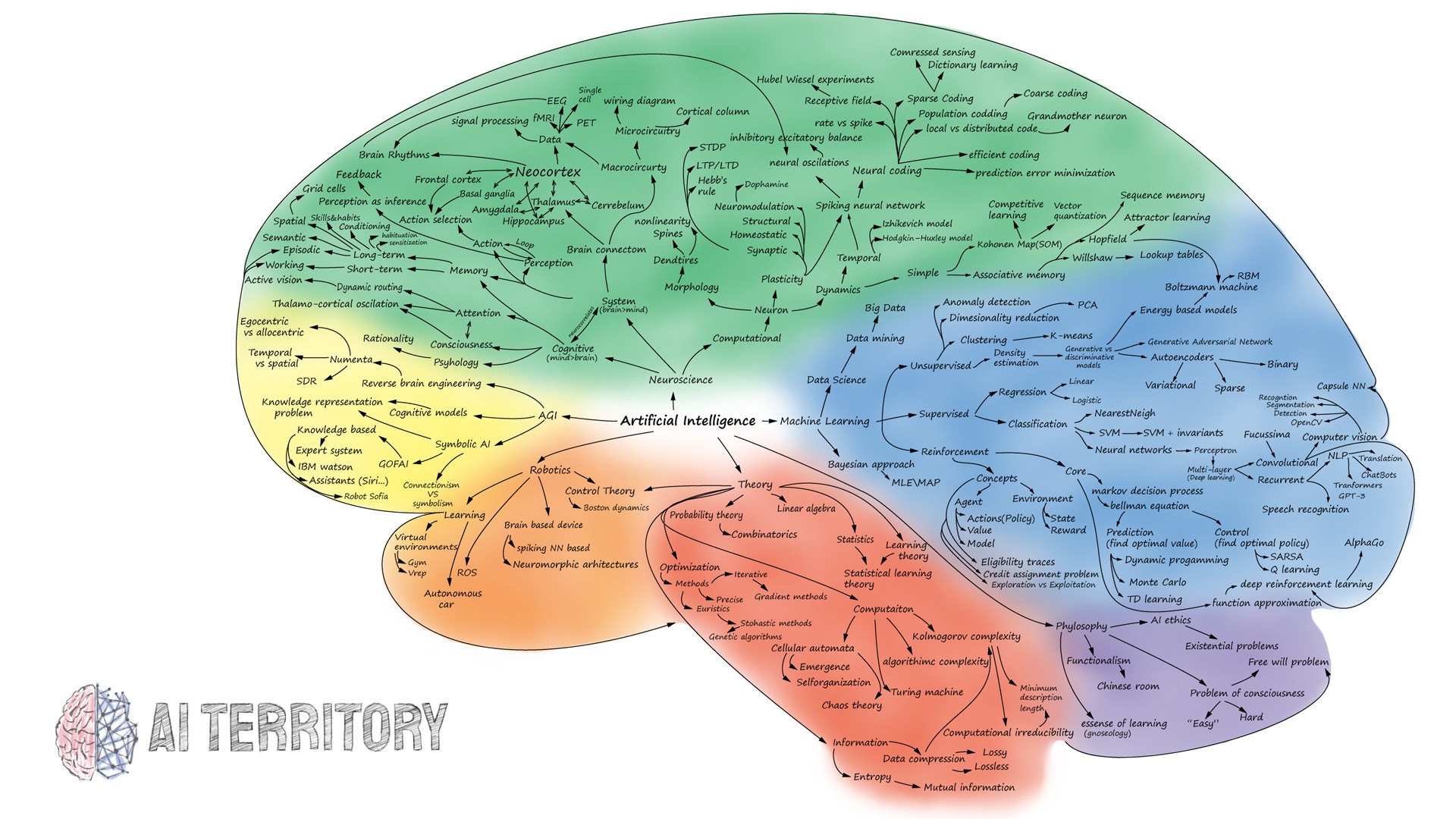
Brain AI map

Learn AI in 2025: A Roadmap

Welcome to your journey into the fascinating world of Artificial Intelligence (AI) and Machine Learning (ML)! If you’re here, you’re likely eager to master these transformative technologies without the commitment of a full-time Master’s Degree. This roadmap is designed to guide you through a curated selection of resources that can help you navigate the AI landscape effectively.

Check out our featured video that provides a visual explanation of the roadmap.

📌 Quick Note: Paid courses are marked as “Paid” (but often free to audit), while others are freely accessible.

📌 Why This Matters: These resources align with the core mathematical and theoretical foundations necessary for AI mastery.


🤖 AI Agents 2025: Free Courses on DeepLearning.ai and Hugging Face

As AI continues to evolve, understanding AI agents is crucial. Explore these exciting free courses that delve into AI agents and their applications:

  • ** Learn AI Agents **: Start Here
  • Practical Multi AI Agents and Advanced Use Cases with crewAI (Free): Start Here
  • AI Agents in LangGraph (Free): Start Here

🚀 Start with Hugging Face: Your Gateway to Deep Learning

Learning AI agents requires prerequisite experience in Deep Learning. Let’s kick things off with Hugging Face, a leader in open-source AI research. They offer a treasure trove of free courses that dive into cutting-edge deep learning techniques. Whether you’re interested in natural language processing or game-based AI development, there’s something here for everyone.

Free AI Courses by Hugging Face (Free)

  • Deep Reinforcement Learning for Game-Based AI Development (Free): Start Here
  • Computer Vision (Free): Enroll Now
  • Natural Language Processing (Free): Learn More

📚 Dive into Machine Learning and Deep Learning

The above courses are based on the solid foundation in Deep Learning and Machine Learning by Coursera. let’s explore some fantastic courses that will give you a solid foundation in machine learning and deep learning. These are designed by some of the best minds in the field.

Learn Machine Learning and Deep Learning from Professor Andrew Ng

Professor Andrew Ng, a pioneer in AI and co-founder of Coursera, has crafted courses that simplify complex concepts, making them accessible to everyone.

Deep Learning with FastAI (Free)

If you prefer a hands-on approach, check out FastAI. Developed by Jeremy Howard, this course emphasizes practical applications while maintaining academic depth. It’s perfect for those eager to implement AI solutions efficiently.

🔗 Access the course: Deep Learning with FastAI


🧮 Build Your Mathematical Foundation

A solid understanding of mathematics is indispensable for mastering AI. Here are some high-quality, theory-based video courses that provide the essential mathematical backbone required for machine learning, deep learning, and AI research.

Mathematics for Machine Learning and Data Science (Coursera, Paid, free to audit)

Curated by esteemed AI expert Luis Serrano, this specialization offers a rigorous foundation in the mathematical underpinnings of machine learning. It covers essential tools like linear algebra, calculus, probability, and statistics.

📖 Enroll here: Mathematics for Machine Learning - Coursera

Khan Academy: Your Go-To for Math Basics

Khan Academy is a fantastic resource for brushing up on your math skills. Here are some key courses:


📖 Essential Books for AI Enthusiasts

To deepen your understanding, consider diving into these insightful books that cover various aspects of AI and machine learning that can supplement the above courses:

  • Ultimate Deep Learning Book - A free, in-depth guide by Simon Prince, covering Transformers, Optimization, and Modern AI Techniques with visual explanations for all levels.
  • The Little Book of Deep Learning – A concise book optimized for mobile devices, helping you grasp deep learning concepts in around 160 pages.
  • D2L Book (Dive into Deep Learning) – An interactive book with Python examples in PyTorch, TensorFlow, and JAX, featuring good exercises and adopted by over 500 universities.
  • The Deep Learning Book – A comprehensive guide by Ian Goodfellow, Yoshua Bengio, and Aaron Courville, covering deep learning theory in detail.

🎥 Video Resources to Enhance Your Learning

Don’t forget to check out these engaging video resources that can provide additional insights into AI advancements and research:


🌟 Final Thoughts: Your AI Journey Awaits

These resources provide a comprehensive roadmap for anyone looking to master Artificial Intelligence for study, work, or fun from in reverse cronological order. Whether you’re just starting out or diving into advanced AI research, this collection will serve as a solid foundation.

Remember, the journey of a thousand miles begins with a single step. So, take that step today, and let your curiosity lead the way!

Happy learning!

Technology

8. The Evolution of Computer Vision and Physical AI: From Cutting-Edge Models to Foundational Concepts

Comprehensive guide to computer vision and AI

Artificial Intelligence Computer Vision Machine Learning

In a world increasingly dominated by visual information, the field of Computer Vision has evolved from simple image recognition systems to sophisticated AI models capable of complex visual reasoning. Today’s most advanced systems—from Meta’s groundbreaking JEPA architecture to real-time object detection with YOLO—represent the culmination of decades of research and innovation. This comprehensive guide explores the current state-of-the-art in computer vision before delving into the fundamental concepts that make these technologies possible.

I. The State-of-the-Art: Modern Computer Vision Architectures

JEPA (Joint Embedding Predictive Architecture) - The Latest Frontier

In the ongoing pursuit of more human-like artificial intelligence, Yann LeCun, Meta’s Chief AI Scientist, proposed a novel architectural paradigm known as the Joint Embedding Predictive Architecture (JEPA). This approach aims to overcome the inherent limitations of current AI systems, particularly in their ability to learn internal models of the world, which is crucial for rapid learning, complex task planning, and effective adaptation to unfamiliar situations.

At its core, JEPA is designed for self-supervised learning, a method where AI models learn directly from unlabeled data without explicit human annotation. Unlike traditional generative models that attempt to reconstruct every pixel or token of an input, JEPA focuses on predicting abstract representations of data. This distinction is critical because the real world is inherently unpredictable at a granular level. For instance, if a generative model tries to fill in a missing part of an image, it might struggle with details that are ambiguous or irrelevant to the overall understanding, leading to errors that a human would intuitively avoid.

I-JEPA: The Image-based Implementation

The Image-based Joint Embedding Predictive Architecture (I-JEPA) is the first concrete realization of LeCun’s JEPA vision, specifically tailored for computer vision tasks. Introduced by Meta AI, I-JEPA learns by constructing an internal model of the visual world, not by comparing raw pixels, but by comparing abstract representations of images. This method has demonstrated robust performance across various computer vision benchmarks while being significantly more computationally efficient than many widely adopted models.

I-JEPA’s operational principle revolves around predicting missing information within an abstract representation. The architecture involves a context encoder, typically a Vision Transformer (ViT), which processes visible context patches of an image. A predictor then forecasts the representations of a target block at a specific location, conditioned by positional tokens of the target.

The predictor within I-JEPA can be conceptualized as a rudimentary world model. It possesses the capacity to model spatial uncertainty within a static image, even when presented with only a partial view. This ability to learn high-level representations of object parts, while retaining their localized positional information, is a significant step towards AI systems that can develop a common-sense understanding of the world.

VLMs (Vision-Language Models) - Bridging Vision and Language

Vision-Language Models (VLMs) represent a pivotal advancement in artificial intelligence, seamlessly integrating capabilities from computer vision and natural language processing. These models are designed to understand and generate content across different modalities, enabling AI systems to interpret visual information in the context of human language and vice versa.

At their core, VLMs learn to establish connections between visual data (images, videos) and textual data (descriptions, questions, commands). This intermodal understanding allows them to perform a wide range of tasks, such as image captioning, visual question answering, text-to-image generation, and even complex reasoning about visual scenes based on linguistic prompts.

The VLM landscape is characterized by continuous innovation, with several key trends shaping its development:

  1. Any-to-any Models: The emergence of models capable of taking input from any modality (e.g., image, text, audio) and generating output in any other modality. These models achieve this by aligning different modalities into a shared representational space. Advanced models, such as Qwen 2.5 Omni and MiniCPM-o 2.6, demonstrate comprehensive understanding and generation across vision, speech, and language.

  2. Reasoning Models: VLMs are increasingly demonstrating sophisticated reasoning capabilities, allowing them to tackle complex problems that require more than just direct interpretation. These models often leverage advanced architectural techniques, such as Mixture-of-Experts (MoE) and extensive chain-of-thought fine-tuning.

  3. Efficient Models: There is a growing emphasis on developing smaller, more efficient VLMs that can operate effectively on consumer-grade hardware, driven by the need to reduce computational costs and enable on-device execution.

  4. Mixture-of-Experts Integration: The integration of MoE architectures offers an alternative to traditional dense networks by dynamically activating only the most relevant sub-models for a given input, significantly enhancing performance and operational efficiency.

YOLO (You Only Look Once) - Real-time Object Detection

YOLO (You Only Look Once) is a groundbreaking family of real-time object detection algorithms that has profoundly impacted the field of computer vision. Introduced in 2015 by Joseph Redmon et al., YOLO revolutionized object detection by treating it as a regression problem, a significant departure from the multi-step pipelines prevalent at the time.

The Paradigm Shift: Single-Shot Detection

Before YOLO, most object detection systems employed a two-step process: first proposing regions of interest in an image, then analyzing each region to identify objects. This sequential nature made these methods computationally intensive and slow. YOLO, in contrast, applies a single convolutional neural network (CNN) to the entire image, simultaneously predicting bounding boxes and class probabilities for objects within those boxes in a single forward pass.

The original YOLOv1 architecture divides the input image into a grid, with each grid cell responsible for predicting a fixed number of bounding boxes and their corresponding class probabilities if the center of an object falls within that cell.

Evolution of YOLO

The YOLO framework has undergone continuous development, with numerous versions introduced over the years:

  • YOLOv2/YOLO9000 (2016): Introduced batch normalization, anchor boxes, and multi-scale training
  • YOLOv3 (2018): Featured a more powerful backbone network and predictions at three different scales
  • YOLOv4 (2020): Optimized the balance between speed and accuracy with various training tricks
  • YOLOv5 (2020): Emphasized efficiency and ease of use with different model sizes
  • YOLOX (2021): Introduced anchor-free detection mechanisms
  • YOLOv8 (2023): Featured redesigned architecture with dynamic anchor-free detection
  • YOLOv11 (2024): Introduced hybrid CNN-transformer models

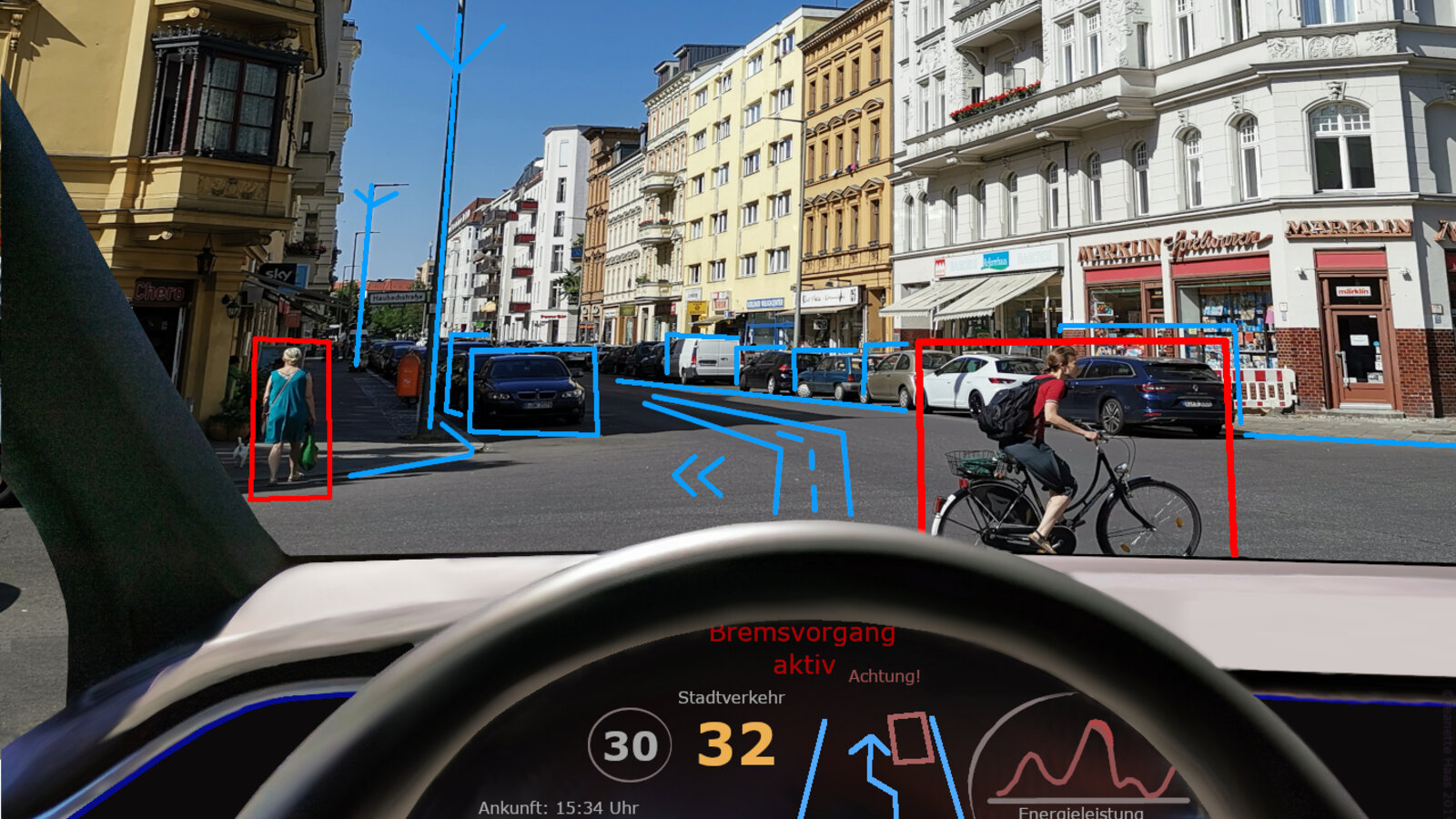
YOLO’s ability to perform object detection in real-time has made it indispensable for applications in autonomous vehicles, robotics, surveillance, and industrial automation.

GANs (Generative Adversarial Networks) - Creating Realistic Data

Generative Adversarial Networks (GANs), introduced in 2014 by Ian Goodfellow, represent a groundbreaking framework in machine learning. GANs employ a two-player minimax game strategy between two neural networks: a generator and a discriminator. This adversarial process allows GANs to learn to generate new data samples that are indistinguishable from real data.

The Adversarial Process

At the heart of a GAN is the dynamic interplay between:

  1. The Generator: Creates synthetic data samples from random noise, aiming to fool the discriminator
  2. The Discriminator: Acts as a critic, distinguishing between real and fake data

During training, these networks are pitted against each other in a continuous learning loop, with both improving through adversarial competition.

Key GAN Variants

Since their inception, GANs have evolved into numerous specialized variants:

  • DCGAN (2015): Integrated convolutional layers and introduced architectural guidelines for stable training
  • Conditional GAN (2014): Enabled generation of data conditioned on additional information
  • Progressive GAN (2017): Revolutionized high-resolution image generation through progressive training
  • CycleGAN (2017): Enabled image-to-image translation without paired training data
  • StyleGAN (2018): Introduced controllable and photorealistic image synthesis
  • Wasserstein GAN (2017): Addressed training instability through improved loss functions

GANs have found applications in image and video synthesis, data augmentation, medical imaging, super-resolution, and even drug discovery.

LeNet-5 - The Foundation

To truly appreciate the current state of computer vision, it’s essential to understand the foundational work that paved the way for modern deep learning. Yann LeCun’s LeNet-5, developed in the late 1990s, was a pioneering convolutional neural network specifically designed for handwritten digit recognition.

LeNet-5 demonstrated the immense potential of neural networks for image-based tasks, laying much of the groundwork for the deep learning revolution. Its success in real-world applications—recognizing handwritten digits for automated mail sorting and ATM check processing—provided compelling evidence of CNNs’ capabilities.

The network’s architecture introduced several key concepts still fundamental to modern CNNs:

  • Alternating convolutional and pooling layers
  • Hierarchical feature extraction
  • End-to-end learning from raw pixels

LeNet-5 directly inspired later, more complex CNN architectures like AlexNet, VGG, and ResNet, which became the backbone of many computer vision applications.

II. Understanding Computer Vision Fundamentals

What is Computer Vision?

Computer vision is a branch of artificial intelligence that trains computers to interpret and understand the visual world. While human vision uses eyes, optic nerves, and the brain’s visual cortex to process images, computer vision systems employ digital cameras, algorithms, and machine learning models to achieve similar capabilities.

At its core, computer vision involves extracting meaningful information from digital images or videos through a process that includes:

  1. Image Acquisition: Capturing visual data through cameras or sensors
  2. Image Processing: Enhancing and manipulating images to improve analysis
  3. Feature Extraction: Identifying key patterns, shapes, or objects within images
  4. Decision Making: Drawing conclusions or taking actions based on visual analysis

How Computers “See” Images

To understand computer vision, it’s essential to grasp how digital images are represented and processed:

  1. Pixel Representation: Digital images consist of pixels, each represented by numerical values. In grayscale images, each pixel has a single value (typically 0-255) indicating brightness. Color images use multiple channels (usually Red, Green, and Blue) with values for each channel.

  2. Feature Detection: Computer vision algorithms identify features like edges, corners, or textures that help distinguish objects within an image.

  3. Pattern Recognition: By analyzing patterns of features, systems can recognize objects, faces, or scenes they’ve been trained to identify.

  4. Spatial Understanding: Advanced systems can interpret the spatial relationships between objects, understanding depth, perspective, and 3D structure from 2D images.

The Role of Deep Learning in Modern Computer Vision

The revolutionary impact of deep learning on computer vision cannot be overstated. Convolutional Neural Networks (CNNs) transformed the field by:

  1. Automatic Feature Learning: Rather than requiring engineers to specify which features to detect, CNNs learn the most relevant features directly from training data.

  2. Hierarchical Processing: CNNs process images through multiple layers, with early layers detecting simple features (like edges) and deeper layers identifying complex patterns (like faces or objects).

  3. Transfer Learning: Pre-trained networks can be fine-tuned for specific tasks, dramatically reducing the amount of data and training time needed for new applications.

  4. End-to-End Learning: Deep learning enables systems to learn directly from raw pixels to final outputs without intermediate hand-designed steps.

III. Core Computer Vision Tasks and Techniques

Image Classification

Image classification involves assigning a label or category to an entire image. This fundamental task forms the basis for many computer vision applications:

  1. Binary Classification: Determining if an image belongs to one of two categories
  2. Multi-Class Classification: Assigning one of several possible labels to an image
  3. Multi-Label Classification: Assigning multiple applicable labels to a single image

Modern classification systems typically use deep neural networks trained on large labeled datasets, achieving accuracy that matches or exceeds human performance on many benchmarks.

Object Detection and Localization

Object detection extends classification by not only identifying what objects are present in an image but also where they are located:

  1. Bounding Box Prediction: Drawing rectangular boxes around detected objects
  2. Instance Segmentation: Creating precise outlines of each object instance
  3. Semantic Segmentation: Classifying each pixel according to the object category it belongs to

Popular frameworks include YOLO for real-time detection, Faster R-CNN for high accuracy, and various transformer-based approaches for state-of-the-art performance.

Image Segmentation

Image segmentation divides an image into meaningful regions, enabling more detailed analysis:

  1. Semantic Segmentation: Assigning each pixel to a specific class
  2. Instance Segmentation: Distinguishing between different instances of the same class
  3. Panoptic Segmentation: Combining semantic and instance segmentation for complete scene understanding

Motion Analysis and Tracking

Understanding movement in video sequences adds a temporal dimension to computer vision:

  1. Object Tracking: Following specific objects across video frames
  2. Optical Flow: Measuring the apparent motion of objects between frames
  3. Activity Recognition: Identifying human actions or behaviors from video sequences

IV. Applications and Impact

Key Application Domains

Computer vision has transformative applications across industries:

  • Healthcare: Medical imaging, diagnostic assistance, surgical guidance
  • Autonomous Vehicles: Road scene understanding, object detection, navigation
  • Manufacturing: Quality control, defect detection, process monitoring
  • Security: Surveillance systems, anomaly detection, access control

Challenges and Future Directions

Despite remarkable progress, computer vision still faces challenges:

  1. Robustness: Handling variations in lighting, viewpoint, and image quality
  2. Generalization: Performing well across different domains and scenarios
  3. Ethical Considerations: Privacy, bias, transparency, and societal impact
  4. Computational Efficiency: Deploying sophisticated models on resource-constrained devices

The Future Landscape

Emerging trends shaping the future of computer vision include:

  1. Multimodal Integration: Combining vision with language, audio, and other modalities
  2. Self-Supervised Learning: Reducing dependence on labeled data
  3. Foundation Models: Large-scale models adaptable to numerous tasks
  4. Neuromorphic Vision: Hardware and algorithms inspired by biological systems
  5. Edge AI: Bringing sophisticated vision capabilities to mobile and embedded devices

Conclusion

The journey from LeNet-5’s foundational digit recognition to today’s sophisticated JEPA architectures represents a remarkable evolution in computer vision. Each breakthrough—from GANs’ generative capabilities to YOLO’s real-time detection and VLMs’ multimodal understanding—has expanded the boundaries of what machines can see and understand.

These technologies are not just academic achievements but practical tools transforming industries and daily life. As computer vision continues to evolve, driven by advances in deep learning, multimodal AI, and efficient architectures, we can expect even more capable systems that blur the lines between human and machine perception.

The future of computer vision lies not just in improved accuracy or speed, but in systems that truly understand the visual world with human-like intuition and common sense—a goal that JEPA and other cutting-edge architectures are beginning to approach. This evolution from pixels to perception represents one of the most significant technological frontiers of our time, with implications that will resonate across all aspects of human society.

References

[1] Meta AI Blog: “I-JEPA: The first AI model based on Yann LeCun’s vision for more human-like AI” (June 13, 2023). Available at: https://ai.meta.com/blog/yann-lecun-ai-model-i-jepa/

[2] Hugging Face Blog: “Vision Language Models (Better, faster, stronger)” (May 12, 2025). Available at: https://huggingface.co/blog/vlms-2025

[3] viso.ai: “YOLO Explained: From v1 to Present” (December 6th, 2024). Available at: https://viso.ai/computer-vision/yolo-explained/

[4] arXiv: “Ten Years of Generative Adversarial Nets (GANs): A survey of the state-of-the-art” (August 30, 2023). Available at: https://arxiv.org/abs/2308.16316

[5] Medium: “LeNet 5 Architecture Explained” (June 22, 2022). Available at: https://medium.com/@siddheshb008/lenet-5-architecture-explained-3b559cb2d52b

[6] Boesch, G. (2024, October 10). Image Recognition: The Basics and Use Cases. Viso.ai. https://viso.ai/computer-vision/image-recognition/

[7] Canales Luna, J. (2025, January 23). What is Computer Vision? A Beginner Guide to Image Analysis. DataCamp. https://www.datacamp.com/blog/what-is-computer-vision

[8] Microsoft Learn. (2025). Fundamentals of Computer Vision. https://learn.microsoft.com/en-us/training/modules/analyze-images-computer-vision/

Technology

7. DeepMind's Alpha Series: Reshaping the Landscape of Artificial Intelligence

Description and impact of Deepmind's alpha series of projects in the world of AI

Artificial Intelligence Machine Learning Mathematics

The future of artificial intelligence is being written by DeepMind’s groundbreaking Alpha series of projects

Introduction: DeepMind’s “Alpha” Series – Pioneering AI Frontiers

Google DeepMind stands as a prominent research laboratory at the vanguard of artificial intelligence (AI). Within its extensive portfolio, the “Alpha” series of projects has consistently captured global attention, representing some of DeepMind’s most ambitious and transformative endeavors. These projects are often characterized by their pursuit of human-level or superhuman performance in tasks of profound complexity, ranging from strategic board games to fundamental scientific discovery.

The “Alpha” designation itself appears to be more than mere branding; it signals a strategic intent to achieve foundational, first-of-their-kind breakthroughs that establish new paradigms and benchmarks for AI capabilities. The consistent application of this prefix to diverse, high-impact initiatives suggests a focus on pioneering work that redefines the boundaries of what AI can achieve. This pattern implies that these are not incremental advancements but concerted efforts to make significant leaps in AI, tackling grand challenges that have long perplexed researchers.

This report will provide a detailed examination of several key projects within DeepMind’s Alpha series, as requested. Each section will delve into the definition, key achievements, and available visual media (images and videos) for AlphaGo, AlphaZero, AlphaGeometry, AlphaProof, AlphaFold, and AlphaEvolve. Following these in-depth analyses, the report will offer an overview of other notable “Alpha” projects, further illustrating the breadth and depth of DeepMind’s contributions to AI. The information presented is drawn from publicly available research and announcements, aiming to provide a comprehensive and accurate account for a technically-informed audience.


AlphaGo: Mastering the Ancient Game of Go

Definition

AlphaGo is an artificial intelligence system developed by DeepMind, meticulously engineered to master the ancient Chinese game of Go. Go is renowned for its strategic depth and combinatorial complexity; the number of possible board configurations is an astounding 10^170, a figure that vastly exceeds the estimated number of atoms in the known universe. This immense search space made Go a long-standing “grand challenge” for the field of AI.

AlphaGo’s architecture represented a significant departure from traditional game-playing AI, combining deep neural networks with sophisticated tree search algorithms. At its core, AlphaGo utilized two primary neural networks: a “policy network,” tasked with selecting the most promising next move, and a “value network,” designed to predict the ultimate winner of the game from any given board position.

Key Achievements

Defeating Human Champions: AlphaGo’s capabilities were first showcased in October 2015, when it defeated Fan Hui, the reigning three-time European Go Champion, with a decisive 5-0 score. This event marked the first time an AI system had triumphed over a professional Go player in a formal match. The system’s most celebrated achievement came in March 2016, when AlphaGo competed against Lee Sedol, an 18-time world champion and a legendary figure in the Go community. In a widely publicized five-game match held in Seoul, South Korea, AlphaGo secured a 4-1 victory. This landmark event, witnessed by an estimated 200 million people worldwide, was broadly considered a pivotal moment for AI, achieving a milestone that many experts had predicted was at least a decade away.

Inventing Winning Moves & Achieving Highest Rank: Beyond mere victory, AlphaGo demonstrated a level of play that impressed and sometimes baffled human experts. The system was awarded a 9 dan professional ranking, the highest possible certification in Go and a first for any computer program. During its matches, particularly against Lee Sedol, AlphaGo played several highly inventive and unconventional moves. The most famous of these was “Move 37” in the second game. This move was so unusual that its probability of being played by a human was estimated at 1 in 10,000. It proved to be a pivotal, game-winning play that upended centuries of conventional Go wisdom. Lee Sedol himself commented on the creativity of the AI, stating, “I thought AlphaGo was based on probability calculation and that it was merely a machine. But when I saw this move, I changed my mind. Surely, AlphaGo is creative”. In a fascinating turn, Lee Sedol played his own highly unconventional “Move 78” (dubbed “God’s Touch”) in game four, which had a similarly low probability and helped him secure his single victory against the AI.

Technical Legacy: AlphaGo’s success had a profound technical legacy. It provided compelling evidence that deep neural networks could be effectively applied to solve problems in highly complex domains, far beyond what was previously thought possible. The system’s reliance on reinforcement learning – where it was trained by playing thousands of games against different versions of itself and learning from its mistakes – showcased a powerful method for machines to learn to solve incredibly challenging problems autonomously, without explicit human programming for every scenario. The underlying principles and architectural innovations of AlphaGo, including its ability to look ahead and plan, have inspired a new generation of AI systems and continue to be relevant in contemporary AI research.

The triumph of AlphaGo did more than just conquer a game; it reshaped perceptions of AI’s potential. Go, unlike chess, was long considered a bastion of human intuition and abstract strategy, seemingly resistant to the brute-force computational approaches that had succeeded in other games. The sheer scale of Go, with its 10^170 possible board configurations, rendered exhaustive search impossible. AlphaGo’s success stemmed from its novel combination of deep learning for pattern recognition (through its policy and value networks) and Monte Carlo Tree Search for intelligent exploration of the game tree. This allowed it to “understand” the game in a way that approximated human intuition, leading to moves like the famous “Move 37” that were not just strong but also appeared creative and insightful. This victory demonstrated that AI could tackle problems requiring nuanced, pattern-based reasoning, moving beyond purely calculative tasks.

Furthermore, AlphaGo’s high-profile matches, especially the series against Lee Sedol, acted as a significant catalyst for both public awareness and scientific investment in AI. The defeat of a world champion in such a complex and culturally revered game served as a “Sputnik moment,” vividly illustrating the rapid advancements in machine learning. This not only validated DeepMind’s specific approach but also spurred a broader wave of research and development in AI, accelerating the trajectory of the entire field. The emotional engagement of the human players and the global audience also highlighted that AI development is not a purely technical pursuit. Lee Sedol’s single win was celebrated as a testament to human creativity and resilience, while the unexpected “creative” moves by AlphaGo prompted introspection within the Go community itself, leading to the exploration of new strategies inspired by the AI. The geopolitical interest, such as the reported ban of a live stream in China during a match with Ke Jie, further underscored the perception of AI achievements as indicators of national technological strength, embedding AI research within a larger societal and global context.


AlphaZero: Generalizing Game Mastery Beyond Go

Definition

AlphaZero is an advanced AI program developed by DeepMind, representing a more generalized and powerful iteration of the principles underlying AlphaGo Zero. Its defining characteristic is its ability to achieve superhuman mastery in multiple complex board games—specifically chess, shogi (Japanese chess), and Go—starting from tabula rasa (a blank slate). AlphaZero learns to play these games solely through self-play, using only the basic rules of each game as input. It does not rely on any human game data, opening books, endgame databases, or other domain-specific human knowledge. The system employs a single, general-purpose reinforcement learning algorithm, deep neural networks, and a Monte-Carlo Tree Search (MCTS) algorithm to discover strategies and evaluate positions.

Key Achievements

Multi-Game Superhuman Performance: The most striking achievement of AlphaZero is its demonstration of superhuman proficiency across three distinct and highly complex strategy games using a unified algorithmic approach. This showcased a significant step towards more general AI, as the same system could adapt its learning to the unique challenges of chess, shogi, and Go.

Rapid Learning from Scratch: AlphaZero exhibited an astonishing speed of learning:

  • Chess: It surpassed the capabilities of Stockfish 8, a world-champion chess engine at the time, after only 9 hours of self-play training. DeepMind estimated that AlphaZero reached a higher Elo rating than Stockfish 8 in a mere 4 hours of this training.
  • Shogi: It defeated Elmo, a champion shogi engine, after approximately 12 hours of training, with some reports indicating mastery in as little as 2 hours.
  • Go: It outperformed AlphaGo Zero (which had already achieved superhuman Go proficiency) after 13 days of training, or surpassed it within 34 hours of self-learning according to other accounts.

Dominant Victories Against Champion Engines: In head-to-head matches, AlphaZero demonstrated clear superiority:

  • Chess: In an initial 100-game match against Stockfish 8 (the 2016 TCEC world champion), AlphaZero won 28 games, drew 72, and suffered no losses. A more extensive 1,000-game match against a 2016 version of Stockfish resulted in 155 wins for AlphaZero, 6 losses, and 839 draws.
  • Shogi: Playing against Elmo (the 2017 CSA world champion version), AlphaZero won 90 out of 100 games, losing 8 and drawing 2, translating to a 91.2% win rate.
  • Go: In matches against its predecessor AlphaGo Zero, AlphaZero won 60 games and lost 40, a 61% win rate.

Efficient and Novel Search Strategy: AlphaZero’s search mechanism is notably different from traditional game engines. It evaluates far fewer positions per second—for instance, around 80,000 positions in chess compared to Stockfish’s 70 million. AlphaZero compensates for this lower search volume by employing its deep neural network to guide the MCTS much more selectively, focusing on the most promising lines of play. This results in a more “intuitive” and efficient search, akin to how human experts narrow down possibilities.

Advancement Towards General AI: The ability of AlphaZero to master three distinct, complex games using a single algorithm, without recourse to human-provided domain knowledge, was widely hailed as a critical advancement. It underscored the potential for creating AI systems capable of tackling a broader array of problems by learning underlying principles from first principles.

The emergence of AlphaZero marked a pivotal moment in AI, particularly in demonstrating the power of tabula rasa learning at a significant scale. While AlphaGo was revolutionary, its initial versions were bootstrapped with data from human expert games. AlphaGo Zero later demonstrated pure self-play mastery in Go. AlphaZero took this concept further by generalizing the “blank slate” approach to multiple, structurally different games—chess, shogi, and Go—using a single, unchanged algorithm. This achievement robustly showed that the core tenets of self-play, neural network-guided search (MCTS), and reinforcement learning were not only powerful but also transferable across diverse complex rule sets and strategic environments. This transferability is a cornerstone of the pursuit of artificial general intelligence.

Beyond its learning methodology, AlphaZero also redefined what it means to “understand” and strategize in these ancient games. It didn’t just defeat the strongest existing programs; it often did so by employing novel, sometimes “alien,” strategies that deviated significantly from centuries of human theory and the established playstyles of other engines. Traditional chess engines, for example, often depended heavily on vast opening books, meticulously curated endgame tablebases, and evaluation functions tuned with human expertise. AlphaZero, starting with none of this pre-programmed knowledge, developed its own distinctive style. This style was often characterized by dynamic piece play, long-term sacrifices for initiative, an emphasis on king safety or piece mobility that surprised grandmasters, and an ability to navigate complex middlegames with remarkable positional judgment. The capacity to discover such powerful and unconventional lines of play with a more “efficient” search (evaluating far fewer board positions) suggested that its neural network was capturing a more profound and nuanced understanding of game dynamics than could be achieved through brute-force calculation or human-engineered heuristics alone.

DeepMind consistently framed AlphaZero’s success not merely as a gaming achievement but as a proof-of-concept for AI’s potential to address complex real-world challenges, especially in scenarios where rules might be unknown or data is scarce. The ability to learn optimal strategies within simulated environments from fundamental principles has direct parallels to scientific discovery, resource optimization, and complex system control. In these domains, an AI could potentially learn optimal policies through simulation or direct interaction, mirroring AlphaZero’s self-play learning in games.


AlphaGeometry: AI Reasoning in Olympiad-Level Mathematics

Definition

AlphaGeometry is an artificial intelligence system developed by Google DeepMind, specifically engineered to solve complex geometry problems at a level comparable to human medalists in the prestigious International Mathematical Olympiad (IMO). The system features a sophisticated neuro-symbolic architecture. This design synergistically combines a neural language model with a symbolic deduction engine. The neural language model is tasked with providing rapid, “intuitive” ideas, primarily by predicting potentially useful auxiliary geometric constructs (like adding specific points, lines, or circles to a diagram). The symbolic deduction engine then undertakes more deliberate, rational decision-making, grounding the problem-solving process in formal logic and generating verifiable proof steps. An advanced iteration, AlphaGeometry2, incorporates a more powerful Gemini-based language model and has been trained on even larger synthetic datasets, enabling it to surpass the average performance of human gold medalists in solving Olympiad geometry problems.

Key Achievements

Olympiad-Level Performance: AlphaGeometry has demonstrated remarkable proficiency in mathematical reasoning:

  • The initial version, AlphaGeometry (AG1), successfully solved 25 out of a benchmark set of 30 IMO geometry problems (compiled from Olympiads between 2000 and 2022) within the standard competition time limits. This performance was notably close to the average achieved by human IMO gold medalists (25.9 problems) and significantly outperformed the previous state-of-the-art AI solver, “Wu’s method,” which only solved 10 of these problems.
  • AlphaGeometry2 (AG2) further elevated this capability, solving 84% of all IMO geometry problems from the past 25 years (a substantial increase from AG1’s 54% success rate). AG2 was also a component of a system that achieved a performance standard equivalent to a silver medal at the IMO 2024.

Synthetic Data Generation at Scale: A pivotal innovation underpinning AlphaGeometry’s success is its method for generating a vast dataset of synthetic training examples. The system created 100 million unique geometry problems along with their corresponding proofs through a process termed “symbolic deduction and traceback.” This approach allowed AlphaGeometry’s language model to be trained from scratch, without depending on the limited and labor-intensive human-translated proofs, thereby overcoming a critical data bottleneck in this specialized domain.

Human-Readable and Verifiable Solutions: The solutions produced by AlphaGeometry are constructed using classical geometry rules, such as those pertaining to angles and similar triangles. This makes the proofs not only verifiable but also understandable by human mathematicians. Evan Chen, a mathematics coach and former IMO gold medalist, evaluated AlphaGeometry’s solutions and commended their verifiability and clarity.

Open Sourcing for Broader Impact: DeepMind has made the code and model for AlphaGeometry open source. This initiative aims to foster further research and development in the field of AI mathematical reasoning, enabling the wider scientific community to build upon AlphaGeometry’s foundations.

The development of AlphaGeometry offers a compelling illustration of how AI can bridge the gap between intuitive pattern recognition and rigorous logical deduction. Traditional purely neural models, such as many large language models (LLMs), often excel at identifying patterns and generating fluent text but can falter when faced with complex, multi-step logical reasoning tasks that demand verifiable outputs. Conversely, purely symbolic AI systems, while strong in formal logic, can be overly rigid and struggle with the “search problem”—efficiently navigating the vast space of possible steps or discovering novel constructions needed to solve a problem.

AlphaGeometry’s neuro-symbolic design effectively marries these two approaches. It mirrors human problem-solving, which often involves both creative “leaps” of intuition and meticulous, step-by-step deduction. The neural language model provides heuristic guidance, akin to a mathematician’s intuition for which auxiliary line or circle might unlock a geometric puzzle. The symbolic deduction engine then ensures the soundness and verifiability of each step in the proof. This synergistic “thinking, fast and slow” paradigm is particularly well-suited for the challenges of IMO-level geometry, which demand both creative insight and unwavering logical rigor.

A crucial factor in AlphaGeometry’s success was its ability to generate its own training data at an immense scale—100 million synthetic examples. This effectively circumvented a major obstacle in developing AI for specialized domains like Olympiad geometry: the scarcity of high-quality, machine-readable training data. High-performance AI models typically require vast datasets. However, translating human mathematical proofs into a formal language that machines can process is a laborious, time-consuming, and highly specialized endeavor, which severely limits the amount of available training material. AlphaGeometry’s innovative “symbolic deduction and traceback” method allowed it to essentially create its own curriculum. By starting with randomly generated geometric configurations, the system exhaustively derived theorems and identified the auxiliary constructions necessary to prove them. This capacity for self-sufficient data generation represents a powerful strategy for training AI in niche, complex fields where human-generated data is limited.

While AlphaGeometry’s current focus is on geometry, its achievements signal a broader potential for AI to contribute meaningfully to other areas of formal mathematics and, by extension, to scientific disciplines that rely heavily on mathematical reasoning. The open-sourcing of its code and model is likely to accelerate this exploration. Geometry is a foundational branch of mathematics, incorporating both visual-spatial reasoning and logical proof. Attaining proficiency at the IMO level in geometry necessitates a degree of reasoning that approaches that of human experts. The architectural principles and data generation techniques pioneered for AlphaGeometry—its neuro-symbolic framework and synthetic data creation—could potentially be adapted for other mathematical domains such as number theory, combinatorics, or even for discovering new proofs or formulating hypotheses in fields like physics or computer science. As a research model, AlphaGeometry is aimed at enhancing the reasoning capabilities that will be vital for future, more general AI systems.


AlphaProof: Advancing AI in Mathematical Proofs

Definition

AlphaProof is an artificial intelligence system developed by Google DeepMind, frequently mentioned in conjunction with its counterpart, AlphaGeometry 2. It is designed to address complex mathematical problems, with a particular focus on challenges presented within the International Mathematical Olympiad (IMO) framework. AlphaProof appears to function as a critical component within a larger neuro-symbolic system, which is geared towards the formalization of mathematical problems and the subsequent generation or verification of their proofs.

Key Achievements

IMO Problem Solving: Working in tandem, AlphaProof and AlphaGeometry 2 demonstrated the capability to successfully solve four out of six problems from a set derived from the International Mathematical Olympiad. This achievement highlights a significant level of mathematical reasoning.

Silver Medal Standard: The combined performance of these systems was assessed as equivalent to achieving a silver medal at the IMO, a notable benchmark for AI in mathematics.

Role in Formalization and Solution: The problem-solving process involving AlphaProof and AlphaGeometry 2 currently relies on a manual translation of IMO problems into the Lean programming language, which is a formal proof assistant language. This manual step is necessary because attempts to use Large Language Models (LLMs) for this complex translation task have, to date, proven unsuccessful. Once a problem is formalized in Lean, AlphaGeometry 2 has demonstrated rapid solution capabilities, such as solving one IMO 2024 problem in just 19 seconds after receiving its formalization. This suggests that AlphaProof’s role may be deeply involved in the aspects of formal proof construction or verification within this structured, formalized environment.

Variable Solution Times and Computational Effort: The system has exhibited variable solution times for different problems. Some problems were solved within minutes, while others required up to three days of computational effort. This variability indicates a correlation between the intrinsic complexity of a mathematical problem and the amount of computational resources and time the AI system needs to arrive at a solution.

The context of AlphaProof’s operation illuminates a critical challenge for AI in the realm of advanced mathematics: the translation of problems stated in natural language into a formal, machine-understandable representation. The current inability of even sophisticated LLMs to reliably perform this translation for IMO-level problems underscores a significant gap. Human mathematical discourse is rich with ambiguity, implicit assumptions, and reliance on diagrammatic or intuitive understanding, which AI systems struggle to parse into precise logical statements. AlphaProof’s success, therefore, primarily manifests after this crucial human-led formalization step, suggesting its strengths lie in manipulating, verifying, and constructing proofs within an already defined formal system, rather than in the initial interpretation of an informally stated problem.

The very name “AlphaProof,” especially when considered alongside “AlphaGeometry 2,” implies a specialized function within a hybrid AI architecture. Mathematical problem-solving typically involves two key phases: the generation of candidate solutions or insightful ideas, and the rigorous proof of their correctness. AlphaGeometry, with its neural language model component, is well-suited for the generative aspect, such as suggesting auxiliary lines or circles in a geometry problem. “AlphaProof,” conversely, strongly suggests a focus on the deductive, verification-oriented part of the mathematical process, ensuring logical soundness within a formal system like Lean. This division of labor—where AlphaGeometry might provide the “intuitive leap” and AlphaProof ensures the “logical rigor”—could represent a powerful and effective model for future AI systems aimed at mathematical discovery.

Despite the significant achievement of reaching an IMO silver medal level, the overall system is not yet fully autonomous. The continued necessity for manual formalization of problems and the fact that not all problems are solved successfully indicate an ongoing, iterative process of human-AI collaboration. In this paradigm, AI tools like AlphaProof augment the capabilities of human mathematicians, assisting with complex deductions, exploring vast search spaces for proofs, or verifying intricate logical steps, rather than entirely replacing human ingenuity in tackling novel and extremely challenging mathematical problems. The future likely involves an even deeper synergy, where humans define problems and interpret AI-generated results, while AI systems handle the computationally intensive or logically complex aspects of mathematical exploration and proof.


AlphaFold: Revolutionizing Biological Discovery

Definition

AlphaFold is a series of groundbreaking artificial intelligence systems developed by Google DeepMind, designed to predict the three-dimensional (3D) structure of proteins from their amino acid sequence with exceptional accuracy. Proteins are the fundamental building blocks and workhorses of life, and their specific 3D shape dictates their function. The challenge of determining a protein’s structure from its linear amino acid sequence, known as the “protein folding problem,” was a central enigma in biology for half a century.

AlphaFold 1, introduced in 2018, marked initial significant progress. However, it was AlphaFold 2, unveiled in 2020, that represented a major scientific breakthrough. It achieved accuracies in protein structure prediction that were competitive with, and in many cases indistinguishable from, those obtained through laborious and expensive experimental methods like X-ray crystallography or cryo-electron microscopy. This version is often credited with largely “solving” the protein folding problem for single protein chains.

More recently, AlphaFold 3, announced in May 2024, significantly expands these capabilities. It can predict not only the structure of individual proteins but also the complex assemblies and interactions they form with a wide array of other biological molecules, including DNA, RNA, small molecules (ligands), ions, and even other proteins. AlphaFold 3 demonstrates substantially improved accuracy for these intermolecular interactions compared to previous methods.

Key Achievements

Solving the Protein Folding Problem: AlphaFold 2’s ability to generate highly accurate 3D models of proteins from their amino acid sequences in minutes, rather than the years it could take experimentally, was a landmark achievement. Its performance in the 14th Critical Assessment of protein Structure Prediction (CASP14) competition in 2020 was widely described as “astounding” and “transformational” by the scientific community, effectively providing a solution to a 50-year-old grand challenge in biology.

AlphaFold Protein Structure Database (AlphaFold DB): In a significant move to democratize access to this technology, DeepMind, in partnership with the European Molecular Biology Laboratory’s European Bioinformatics Institute (EMBL-EBI), launched the AlphaFold DB. This publicly accessible database provides free access to millions of protein structure predictions generated by AlphaFold. As of recent updates, it contains over 200 million structure predictions, covering nearly all cataloged proteins known to science from across the tree of life. This resource has been utilized by over two million researchers globally and is estimated to have saved hundreds of millions of years of research time and substantial financial resources.

AlphaFold 3 Advancements: The latest iteration, AlphaFold 3, represents another leap forward. It moves beyond single protein chains to model the structures of complex biomolecular assemblies. For interactions such as protein-ligand and protein-RNA, AlphaFold 3 shows at least a 50% improvement in accuracy over existing specialized prediction methods, and for some important categories of interaction, the prediction accuracy is doubled.

Broad Impact on Scientific Research: AlphaFold has rapidly become an indispensable tool in biological research, accelerating discovery across a vast spectrum of fields:

  • Drug Discovery and Design: It aids in identifying new drug targets, understanding mechanisms of drug action, and designing novel therapeutics by providing accurate models of target proteins and their binding sites.
  • Disease Understanding: AlphaFold is instrumental in studying the molecular basis of diseases, including malaria, Parkinson’s disease, cancer, and antibiotic resistance, by revealing the structures of disease-related proteins.
  • Environmental Science and Biotechnology: The technology is being explored for applications such as designing enzymes to break down plastic pollutants or to capture carbon dioxide, contributing to solutions for environmental challenges.
  • Basic Biology: It helps researchers understand fundamental biological processes by elucidating the structures and potential functions of previously uncharacterized proteins.

Technical Underpinnings: AlphaFold’s success is built on advanced deep learning techniques, particularly attention-based neural network architectures. The models were trained on the vast repository of experimentally determined protein structures available in the Protein Data Bank (PDB), along with large databases of protein sequences.

Nobel Prize Recognition: The profound impact of AlphaFold was recognized at the highest level of scientific achievement. Demis Hassabis and John Jumper of DeepMind, along with David Baker (for independent, related work in computational protein design), were awarded the 2024 Nobel Prize in Chemistry for their groundbreaking advances in computer-assisted protein design and structure prediction, with AlphaFold being a central component of this recognition.

The advent of AlphaFold, particularly AlphaFold 2, represented a paradigm shift in structural biology and molecular biology at large. For decades, determining the 3D structure of a protein was a major bottleneck in understanding its function. Experimental methods, while powerful, are often slow, expensive, and not always successful for every protein. AlphaFold dramatically changed this landscape by providing a computational method that could predict structures with high accuracy, often comparable to experimental results, within minutes or hours. This acceleration has profound implications: researchers can now rapidly generate structural hypotheses for virtually any protein of interest, guiding experimental work and opening up new avenues of investigation that were previously impractical. The system does not merely interpolate from known structures; it learns complex patterns from sequence data and structural information to predict novel folds.

The creation and open sharing of the AlphaFold DB further amplified its impact, democratizing access to structural information on an unprecedented scale. This has empowered researchers globally, particularly those with limited resources for experimental structure determination, to tackle complex biological questions. The progression to AlphaFold 3, which addresses molecular interactions, extends this predictive power to the even more complex realm of how life’s molecules work together in intricate biological systems. While AlphaFold provides static snapshots of structures and doesn’t fully capture protein dynamics or the precise mechanisms of folding, its ability to predict the most probable folded state and interaction interfaces is an invaluable starting point for a vast range of biological and biomedical research. It has effectively transformed structural biology from a field often limited by data acquisition to one increasingly driven by data interpretation and hypothesis testing based on readily available, high-quality structural models.


AlphaEvolve: AI-Driven Algorithm Discovery and Optimization

Definition

AlphaEvolve is an advanced AI agent developed by Google DeepMind that leverages the capabilities of large language models (LLMs), specifically Gemini models, for general-purpose algorithm discovery and optimization. It is designed as an evolutionary coding agent that can go beyond discovering single functions to evolve entire codebases and develop much more complex algorithms. AlphaEvolve combines the creative problem-solving strengths of LLMs with automated evaluators that rigorously verify the correctness and performance of generated solutions. It employs an evolutionary framework to iteratively refine promising ideas, effectively searching for and optimizing algorithms across diverse domains, including mathematics, computer science, data center operations, and hardware design.

Key Achievements

Broad Algorithmic Discovery and Optimization: AlphaEvolve has demonstrated its utility across a range of challenging problems:

  • Data Center Efficiency: It discovered a simple yet highly effective heuristic for Google’s Borg system, which orchestrates tasks across Google’s vast data centers. This solution, in production for over a year, has consistently recovered an average of 0.7% of Google’s worldwide compute resources, leading to significant efficiency gains and the ability to complete more tasks on the same computational footprint. The generated code is human-readable, interpretable, and easily deployable.
  • Hardware Design Assistance: AlphaEvolve proposed a Verilog (hardware description language) rewrite that removed unnecessary bits in a critical, highly optimized arithmetic circuit for matrix multiplication. This optimization was integrated into an upcoming Tensor Processing Unit (TPU), Google’s custom AI accelerator, showcasing AI’s potential to collaborate with hardware engineers to accelerate chip design.
  • Enhanced AI Training and Inference: AlphaEvolve has accelerated AI model training. By finding more efficient ways to divide large matrix multiplication operations, it sped up a vital kernel in the Gemini architecture by 23%, contributing to a 1% reduction in Gemini’s overall training time. It also optimized low-level GPU instructions for the FlashAttention kernel in Transformer models, achieving speedups of up to 32.5%, an area typically only handled by compilers due to its complexity. This reduces engineering time for kernel optimization from weeks to days.
  • Mathematical Problem Solving: AlphaEvolve has tackled complex mathematical problems. It designed components of a novel gradient-based optimization procedure that discovered multiple new algorithms for matrix multiplication. It found an algorithm to multiply 4×4 complex-valued matrices using only 48 scalar multiplications, an improvement over Strassen’s 1969 algorithm and surpassing previous AI attempts like AlphaTensor in generality.
  • Progress on Open Mathematical Problems: When applied to over 50 open problems in areas like mathematical analysis, geometry, combinatorics, and number theory, AlphaEvolve rediscovered state-of-the-art solutions in approximately 75% of cases and improved upon previously best-known solutions in 20% of instances. Notably, it advanced the kissing number problem by discovering a configuration of 593 outer spheres touching a central unit sphere in 11 dimensions, establishing a new lower bound.

Evolutionary Approach with LLMs: AlphaEvolve operates by using LLMs (like Gemini Flash for fast idea generation and Gemini Pro for deeper improvements) to propose code modifications or entire algorithms. These are then tested by automated evaluators against defined metrics (e.g., correctness, speed, resource usage). An evolutionary framework guides the process, selecting and iteratively improving the most promising solutions. This allows it to evolve entire codebases, not just individual functions.

Addressing AI Hallucinations: The system is designed to minimize errors or “AI hallucinations” by critically evaluating its own solutions through a feedback loop of generation and evaluation, making it particularly effective for numerical problems with machine-gradable solutions.

The development of AlphaEvolve represents a significant stride in AI’s capacity to not only learn from existing data but to actively generate and refine novel solutions to complex algorithmic problems. Its ability to evolve entire codebases and tackle problems across diverse domains like data center optimization, hardware design, and pure mathematics points towards a more general-purpose algorithmic discovery tool. The evolutionary process, powered by the generative capabilities of LLMs and disciplined by rigorous automated evaluation, allows AlphaEvolve to explore vast solution spaces that might be inaccessible or non-obvious to human programmers.

A key aspect of AlphaEvolve’s impact is its potential to automate or significantly accelerate tasks that traditionally require deep human expertise and considerable time, such as optimizing low-level code for specific hardware or finding more efficient algorithms for fundamental computations. The 0.7% recovery of global compute resources at Google, achieved through an AlphaEvolve-discovered heuristic, translates into massive real-world savings and efficiency gains, given Google’s scale. This demonstrates a tangible return on investment from AI-driven optimization. Furthermore, its success in improving mathematical bounds, like the kissing number in 11 dimensions, shows its potential to contribute to fundamental scientific and mathematical research, pushing the boundaries of known solutions. The system’s ability to produce human-readable code is also crucial for trust and adoption, allowing human engineers to understand, verify, and integrate the AI-generated solutions. This collaborative aspect, where AI suggests novel approaches that humans can then refine or implement, may define a new era of human-AI partnership in innovation.


Other Notable “Alpha” Projects by DeepMind

Beyond the systems detailed above, DeepMind’s “Alpha” series includes a range of other pioneering projects, each pushing the boundaries of AI in its respective domain.

AlphaDev

Definition: AlphaDev is an AI system, based on AlphaZero’s reinforcement learning approach, designed to discover enhanced computer science algorithms, particularly for fundamental tasks like sorting and hashing, by treating algorithm discovery as a game. It iteratively builds algorithms in assembly language, optimizing for speed and correctness.

Achievements: AlphaDev discovered new sorting algorithms that led to up to 70% improvements in the LLVM libc++ sorting library for shorter sequences and about 1.7% for very long sequences. These algorithms, featuring unique “AlphaDev swap and copy moves,” were integrated into the C++ standard library. It also improved hashing algorithms by up to 30% in specific cases for the Abseil C++ library and optimized VarInt deserialization in Protocol Buffers (protobuf) by approximately three times in speed compared to human benchmarks. Google estimates these AlphaDev-discovered algorithms are used trillions of times daily.

AlphaCode

Definition: AlphaCode is an AI system from DeepMind that generates computer programs at a competitive level. It uses transformer-based language models to produce a vast number of potential code solutions to programming problems, then intelligently filters them down to a small set of promising candidates.

Achievements: AlphaCode achieved an estimated rank within the top 54% of participants in programming competitions hosted on the Codeforces platform. This marked the first time an AI code generation system reached a competitive level of performance in such contests, solving novel problems requiring critical thinking, logic, algorithm design, and natural language understanding. It was pretrained on 715 GB of code from GitHub and fine-tuned on a competitive programming dataset.

AlphaStar

Definition: AlphaStar is an AI software developed by DeepMind to play the complex real-time strategy (RTS) game StarCraft II. Its architecture involves a deep neural network (using a transformer torso and LSTM core) and a novel multi-agent learning algorithm, initially trained via supervised learning on human game replays and then refined through extensive self-play in a league system.

Achievements: AlphaStar was the first AI to reach the “Grandmaster” level in StarCraft II (top 0.2% of human players) on the full, unrestricted game under professionally approved conditions. In December 2018, it defeated professional player Grzegorz “MaNa” Komincz 5-0, though with some initial advantages regarding game interface access. After retraining with more constrained, human-like interface limitations, it still achieved Grandmaster status anonymously on the public European ladder in August 2019.

MuZero

Definition: MuZero is an AI algorithm that takes AlphaZero’s capabilities a step further by mastering games (Go, chess, shogi, and a suite of Atari games) without being told the rules. It learns a model of its environment and uses this learned model for planning, combining model-based planning with model-free reinforcement learning.

Achievements: MuZero matched AlphaZero’s performance in chess and shogi, improved upon AlphaZero in Go (setting a new world record at the time of its paper), and surpassed the state-of-the-art in mastering 57 Atari games without prior knowledge of their dynamics. Its ability to plan effectively in unknown environments was a significant advance for reinforcement learning.

AlphaTensor

Definition: AlphaTensor is the first AI system developed by DeepMind for discovering novel, efficient, and provably correct algorithms for fundamental mathematical tasks, most notably matrix multiplication. It builds upon AlphaZero’s reinforcement learning framework, reformulating algorithm discovery as a single-player game (TensorGame).

Achievements: AlphaTensor rediscovered known fast matrix multiplication algorithms (like Strassen’s) and discovered algorithms that are more efficient than the state-of-the-art for many matrix sizes, improving on a 50-year-old open question. For example, it found an algorithm for multiplying a 4×5 by 5×5 matrix using 76 multiplications, down from the previous best of 80. It can also be tailored to find algorithms optimized for specific hardware, achieving 10-20% speedups on GPUs and TPUs.

AlphaMissense

Definition: AlphaMissense is an AI tool derived from AlphaFold, designed to classify the effects of “missense” mutations (single amino acid changes in proteins) as likely pathogenic, likely benign, or uncertain. It leverages AlphaFold’s structural insights and is fine-tuned on human and primate variant population frequency databases.

Achievements: AlphaMissense has successfully predicted the impact of 71 million gene missense mutations, classifying 57% as likely pathogenic and 32% as likely benign. It has shown high agreement with clinical databases like ClinVar, providing definitive classifications for many mutations previously labeled as “unknown significance”. Its predictions correlate well with cell essentiality and functional impact assays, aiding in genomic diagnostics and understanding disease mechanisms.

AlphaProteo

Definition: AlphaProteo is Google DeepMind’s AI system for generating novel, high-strength protein binders—proteins designed to attach to specific target molecules. It builds on AlphaFold’s structural prediction capabilities.

Achievements: AlphaProteo has designed protein binders with significantly better binding affinities (3 to 300 times stronger) and higher experimental success rates than existing methods for several target proteins. It was the first AI tool to design a successful binder for VEGF-A, a protein implicated in cancer and diabetes complications. For the viral protein BHRF1, 88% of its candidate molecules bound successfully in wet lab tests. Its designs have been validated by external research groups, showing useful biological functions like preventing SARS-CoV-2 infection.

AlphaQubit (and AlphaTensor-Quantum)

Definition: AlphaQubit is an AI-based decoder, developed by Google DeepMind and Google Quantum AI, that uses a Transformer-based neural network to identify and correct errors in quantum computers with high accuracy. A related effort, AlphaTensor-Quantum, adapts the AlphaTensor framework to optimize quantum circuits by minimizing the number of T-gates (expensive but essential quantum operations).

Achievements: AlphaQubit set a new standard for accuracy in decoding quantum errors on Google’s Sycamore quantum processor, making 6% fewer errors than tensor network methods and 30% fewer errors than correlated matching in large experiments. AlphaTensor-Quantum outperformed state-of-the-art optimization methods and matched human-designed solutions for T-count reduction in quantum circuits, demonstrating AI’s potential to automate quantum circuit design.


Conclusion: The Evolving Trajectory of “Alpha” Innovations

The “Alpha” series from DeepMind collectively represents a remarkable journey of AI innovation, consistently pushing the frontiers of what intelligent systems can achieve. From the strategic depths of Go mastered by AlphaGo and the generalized game-playing prowess of AlphaZero, to the complex scientific challenges addressed by AlphaFold in protein structure prediction and AlphaGeometry in mathematical reasoning, these projects underscore a clear trajectory: AI is evolving from a tool for specific tasks to a partner in discovery and complex problem-solving.

AlphaGo’s victory was more than a gaming milestone; it demonstrated that AI could tackle domains requiring intuition and creativity, fundamentally altering perceptions of AI’s potential. AlphaZero built upon this by showcasing that a single algorithm could achieve superhuman performance across multiple distinct games without human data, a crucial step towards more general intelligence. This “tabula rasa” learning paradigm, where systems learn from first principles through self-play or simulation, is a recurring theme.

The series then expanded into the scientific domain with profound impact. AlphaFold’s ability to predict protein structures with experimental accuracy has revolutionized biology, accelerating research in drug discovery, disease understanding, and beyond. Similarly, AlphaGeometry and AlphaProof are making inroads into the highly abstract and logical realm of advanced mathematics, solving Olympiad-level problems and hinting at AI’s future role in formal reasoning and proof generation. AlphaEvolve further extends this into algorithmic discovery itself, creating and optimizing code for complex computational tasks, from data center management to fundamental mathematics.

Other projects like AlphaDev (optimizing core computing algorithms), AlphaCode (competitive programming), AlphaStar (mastering complex real-time strategy games), MuZero (learning game rules from scratch), AlphaTensor (discovering new matrix multiplication algorithms), AlphaMissense (classifying genetic mutations), AlphaProteo (designing novel proteins), and AlphaQubit (improving quantum error correction) each contribute to this narrative of AI tackling increasingly sophisticated and diverse challenges.

A common thread is the ambition to create systems that can learn complex patterns, reason, plan, and even generate novel solutions in ways that augment or surpass human capabilities. The progression from game-playing AI to systems that assist in scientific discovery and algorithm optimization suggests a future where AI tools become indispensable collaborators in advancing knowledge across numerous fields.

While challenges remain, particularly in achieving true general intelligence and ensuring responsible development, DeepMind’s “Alpha” series has already provided a compelling glimpse into the transformative potential of artificial intelligence. The consistent naming itself—“Alpha”—serves as a persistent reminder of the pioneering spirit driving these endeavors, aiming for foundational breakthroughs that redefine the state of the art.


This comprehensive exploration of DeepMind’s Alpha series demonstrates how artificial intelligence continues to push the boundaries of what’s possible across gaming, mathematics, biology, and beyond. As these systems evolve, they promise to reshape our understanding of intelligence itself and unlock new frontiers in scientific discovery.

Technology

6. Building VivekaNandaGPT

Building VivekanandaGPT using opensource modesl with RAG, data cleaning and system prompt

Artificial Intelligence NLP Machine Learning

Introduction

In an age where information is abundant, the ability to quickly and accurately access specific knowledge from vast textual sources is paramount. Large Language Models (LLMs) have revolutionized how we interact with information, but they often suffer from issues like hallucination and a lack of up-to-date knowledge. Retrieval-Augmented Generation (RAG) offers a powerful solution by combining the generative capabilities of LLMs with the precision of information retrieval. This blog post details the creation of “VivekanandaGPT,” a specialized chatbot designed to provide answers based solely on the teachings and writings of Swami Vivekananda, drawing from his complete works available on Wikisource.

Our goal is to demonstrate how open-source models and publicly available data can be leveraged to build a domain-specific AI assistant. VivekanandaGPT will serve as a reliable source of information on Swami Vivekananda’s philosophy, ensuring that all responses are grounded in his original texts and eliminating external biases or fabricated content.

This post will walk you through the entire process, from data acquisition and cleaning to selecting appropriate open-source models and implementing the RAG architecture. We will also address crucial steps to mitigate

Data Acquisition and Cleaning

The foundation of any successful RAG model is the quality of its knowledge base. For VivekanandaGPT, our primary source of information is “The Complete Works of Swami Vivekananda” from Wikisource. This digital collection contains a comprehensive repository of his speeches, writings, letters, and conversations.

Scraping the Data

To build our knowledge base, we first needed to extract the text from the Wikisource website. We developed a Python script using the requests and BeautifulSoup libraries to scrape the content. The script navigates the main page, identifies all links to the individual volumes and sections of the book, and then extracts the text from each page.

One of the initial challenges was handling the relative URLs found on the page. The script was designed to prepend the base URL (https://en.wikisource.org) to any relative links to ensure they could be accessed correctly. Additionally, to avoid being blocked by the server for making too many requests in a short period, we incorporated a one-second delay between each page request.

Cleaning the Text

The raw HTML content scraped from the web is filled with extraneous information, such as navigation menus, headers, footers, and other elements that are not part of the actual text. To create a clean dataset for our RAG model, we performed a series of cleaning steps:

  1. Removing Unwanted HTML Elements: We used BeautifulSoup to parse the HTML and remove all script, style, header, footer, nav, and other non-content tags.

  2. Filtering by IDs and Classes: We identified specific CSS IDs and classes used by Wikisource for non-content elements (e.g., mw-navigation, printfooter) and removed them from the parsed HTML.

  3. Extracting the Main Content: We found that the primary content of each page was typically contained within a div element with the ID mw-content-text. We extracted the text from this div to isolate the relevant information.

  4. Text Normalization: We performed several text normalization steps, including:

    • Replacing multiple spaces and newlines with a single space or newline.
    • Removing common Wikisource/Wikipedia artifacts like “[edit]”, “[citation needed]”, and navigation links.

Here is the Python script we used for this process:

import requests
from bs4 import BeautifulSoup
import re
import os
import time

def get_page_content(url):
    try:
        response = requests.get(url)
        response.raise_for_status()  # Raise an exception for HTTP errors
        return response.text
    except requests.exceptions.RequestException as e:
        print(f"Error fetching {url}: {e}")
        return None

def clean_text(html_content):
    if not html_content:
        return ""
    soup = BeautifulSoup(html_content, 'html.parser')

    # Remove unwanted elements (scripts, styles, navigation, etc.)
    for s in soup(['script', 'style', 'header', 'footer', 'nav', 'aside', 'form', 'input', 'button', 'img', 'link']):
        s.decompose()

    # Remove elements with specific IDs or classes that are not content
    unwanted_ids = ['mw-navigation', 'mw-panel', 'footer', 'p-logo', 'p-navigation', 'p-search', 'p-interaction', 'p-tb', 'p-coll-print_export', 'p-lang', 'siteSub', 'contentSub', 'jump-to-nav', 'firstHeading', 'catlinks']
    for id_name in unwanted_ids:
        element = soup.find(id=id_name)
        if element:
            element.decompose()

    unwanted_classes = ['mw-editsection', 'printfooter', 'portal', 'mw-indicator', 'noprint', 'sister-project', 'infobox', 'metadata', 'thumbinner', 'mw-jump-link']
    for class_name in unwanted_classes:
        for element in soup.find_all(class_=class_name):
            element.decompose()

    # Extract main content area - this might need adjustment based on page structure
    content_div = soup.find(id='mw-content-text')
    if content_div:
        text = content_div.get_text(separator=' ', strip=True)
    else:
        text = soup.get_text(separator=' ', strip=True)

    # Remove multiple spaces and newlines
    text = re.sub(r'\s+', ' ', text)
    text = re.sub(r'\n+', '\n', text)

    # Remove common wikisource/wikipedia artifacts that remain
    text = re.sub(r'\(function\(\) {[^}]*}\)\(\);', '', text) # Remove javascript snippets
    text = re.sub(r'^\[[^\]]*\]', '', text) # Remove leading [Jump to content] etc.
    text = re.sub(r'\b(?:edit|citation needed|page|talk|read|view history|tools|download)\b', '', text, flags=re.IGNORECASE)
    text = re.sub(r'\b(?:Sisters and Brothers of America)\b', '', text) # Specific to the first page

    return text.strip()

def main():
    base_url = "https://en.wikisource.org"
    main_page_url = base_url + "/wiki/The_Complete_Works_of_Swami_Vivekananda"
    
    # Get all links from the main page that point to volumes/sections
    main_page_content = get_page_content(main_page_url)
    if not main_page_content:
        print("Could not fetch main page content. Exiting.")
        return

    soup = BeautifulSoup(main_page_content, 'html.parser')
    all_links = [a.get('href') for a in soup.find_all('a', href=True)]
    
    # Filter for relevant volume/section links and prepend base_url if relative
    volume_links = []
    for link in all_links:
        if link and "The_Complete_Works_of_Swami_Vivekananda/Volume_" in link and not "#" in link and not "action=edit" in link:
            if link.startswith("/"):
                volume_links.append(base_url + link)
            else:
                volume_links.append(link)
    
    # Remove duplicates by converting to set and back to list
    volume_links = list(set(volume_links))
    
    # Create a directory to store the cleaned text files
    output_dir = "vivekananda_text"
    os.makedirs(output_dir, exist_ok=True)

    print(f"Found {len(volume_links)} unique volume/section links. Starting extraction...")

    for i, link in enumerate(volume_links):
        print(f"Processing link {i+1}/{len(volume_links)}: {link}")
        page_content = get_page_content(link)
        cleaned_text = clean_text(page_content)
        
        # Create a filename from the URL
        filename = link.split('/')[-1].replace(':', '').replace(' ', '_') + ".txt"
        file_path = os.path.join(output_dir, filename)
        
        with open(file_path, "w", encoding="utf-8") as f:
            f.write(cleaned_text)
        print(f"Saved cleaned text to {file_path}")
        time.sleep(1) # Add a 1-second delay to avoid rate-limiting

if __name__ == "__main__":
    main()

The result of this process is a directory of clean text files, each corresponding to a section of Swami Vivekananda’s complete works. This cleaned dataset forms the backbone of our VivekanandaGPT, providing the knowledge base from which the RAG model will retrieve information.

Open-Source Models and RAG Implementation

Building a RAG system involves several key components: an embedding model to convert text into numerical representations (embeddings), a vector database to store and efficiently search these embeddings, and a Large Language Model (LLM) to generate responses based on retrieved information. The open-source ecosystem offers a wealth of options for each of these components, allowing for flexible and cost-effective deployment.

Choosing an Open-Source LLM

For VivekanandaGPT, the choice of LLM is crucial. We need a model that can be fine-tuned or effectively used with RAG to provide accurate and contextually relevant answers based on Swami Vivekananda’s teachings. While many powerful LLMs exist, we prioritize open-source models that can be run either locally or on platforms like Hugging Face, ensuring accessibility and control over the deployment environment. Some strong candidates for RAG applications include:

  • Llama 2 (Meta): A family of pre-trained and fine-tuned LLMs ranging in size from 7B to 70B parameters. Llama 2 has shown strong performance across various tasks and is a popular choice for RAG due to its open availability and robust community support.
  • Mistral 7B (Mistral AI): A smaller yet highly capable model that offers excellent performance for its size, making it suitable for local deployment or environments with limited resources. Its efficiency and strong performance make it a compelling option for RAG.
  • Gemma (Google): A lightweight, state-of-the-art open model from Google, built from the same research and technology used to create the Gemini models. Gemma models are designed for responsible AI development and offer good performance for their size.

The selection will ultimately depend on the available computational resources and the desired balance between model size, performance, and inference speed.

RAG Frameworks and Libraries

Implementing a RAG pipeline from scratch can be complex. Fortunately, several open-source frameworks and libraries simplify the process, providing pre-built components and abstractions for common RAG patterns. Key frameworks include:

  • LangChain: A widely adopted framework for developing applications powered by language models. LangChain provides modules for document loading, text splitting, embeddings, vector stores, and chaining LLM calls with retrieval. Its extensive integrations and active community make it an excellent choice for building RAG applications.
  • LlamaIndex: Another popular data framework for LLM applications, LlamaIndex focuses on making it easy to ingest, structure, and access private or domain-specific data with LLMs. It offers various data connectors and indexing strategies optimized for RAG.
  • Haystack (Deepset): An end-to-end framework for building NLP applications, including RAG. Haystack provides a modular architecture that allows developers to easily swap out components like retrievers, readers, and generators. It’s known for its flexibility and production-readiness.
  • RAGFlow: An open-source RAG (Retrieval-Augmented Generation) engine that aims to streamline the RAG workflow. It combines LLMs with external knowledge bases to provide truthful question-answering capabilities.

These frameworks abstract away much of the complexity, allowing developers to focus on integrating their data and chosen LLMs. For VivekanandaGPT, we will likely leverage LangChain or LlamaIndex due to their comprehensive features and strong community support.

Vector Stores

To efficiently retrieve relevant text snippets from our cleaned Vivekananda dataset, we need a vector store. A vector store (or vector database) stores the numerical embeddings of our text data and allows for fast similarity searches. Popular open-source options include:

  • Chroma: A lightweight, in-memory vector database that is easy to set up and use for smaller-scale RAG applications. It’s a good choice for prototyping and local development.
  • FAISS (Facebook AI Similarity Search): A library for efficient similarity search and clustering of dense vectors. While not a full-fledged database, it’s highly optimized for speed and can be used for the retrieval component of a RAG system.
  • Pinecone, Weaviate, Qdrant: These are more robust, production-ready vector databases that offer scalability, persistence, and advanced features. While some have open-source components, they often involve cloud-based services for full functionality.

For the initial prototype of VivekanandaGPT, Chroma or FAISS would be suitable for local development, providing a solid foundation for the retrieval mechanism.

Mitigating Hallucination and Ensuring Personality

One of the core requirements for VivekanandaGPT is to eliminate false personality or outside data-based hallucination and ensure all answers are strictly based on the provided dataset. This can be achieved through a combination of RAG architecture design and careful prompt engineering:

  1. Strict RAG Implementation: By ensuring that the LLM only generates responses based on the retrieved context from the Vivekananda dataset, we inherently limit its ability to

generate information outside of the provided texts. The RAG architecture itself acts as a strong guardrail against hallucination.

  1. System Prompt Engineering: A critical step in controlling the LLM’s behavior is through a well-crafted system prompt. This prompt sets the persona and constraints for the LLM, guiding its responses. For VivekanandaGPT, the system prompt will explicitly instruct the model to:
    • Act as Swami Vivekananda: The model should adopt the tone, style, and philosophical perspective of Swami Vivekananda based on the provided texts.
    • Adhere strictly to the provided context: Emphasize that responses must be derived only from the retrieved documents. The model should not use its pre-trained knowledge beyond understanding the query and the provided context.
    • State ignorance for out-of-context questions: If a question cannot be answered using the provided texts, the model should explicitly state, “I am not aware of that,” or a similar phrase, rather than attempting to generate a speculative answer.
    • Avoid personal opinions or external information: Reinforce that the model should not introduce its own opinions, external facts, or information not present in Swami Vivekananda’s works.

An example of such a system prompt might look like this:

"You are Swami Vivekananda. Your purpose is to answer questions based solely on the provided texts from 'The Complete Works of Swami Vivekananda'. Do not use any external knowledge or personal opinions. If a question cannot be answered from the provided context, respond with 'I am not aware of that.' Maintain the philosophical and spiritual tone of Swami Vivekananda in your responses."

This explicit instruction helps to eliminate false personality and outside data-based hallucination, ensuring that VivekanandaGPT remains true to its source material.

Building VivekanandaGPT Prototype

With the data cleaned and our understanding of open-source RAG components solidified, the next step is to build a functional prototype of VivekanandaGPT. This involves:

  1. Text Chunking and Embedding: The cleaned text data will be divided into smaller, manageable chunks. These chunks will then be converted into numerical vector embeddings using an open-source embedding model (e.g., all-MiniLM-L6-v2 from Hugging Face). These embeddings capture the semantic meaning of the text.

  2. Vector Database Population: The generated embeddings, along with their corresponding text chunks, will be stored in a vector database (e.g., ChromaDB). This database will enable efficient similarity searches, allowing us to quickly retrieve the most relevant text chunks when a user asks a question.

  3. RAG Pipeline Construction: We will use a RAG framework like LangChain to orchestrate the retrieval and generation process. The pipeline will typically involve:

    • Retriever: Given a user query, the retriever will search the vector database for the most semantically similar text chunks from Swami Vivekananda’s works.
    • Generator: The retrieved text chunks will be passed as context to the chosen open-source LLM (e.g., Llama 2, Mistral 7B). The LLM, guided by the system prompt, will then generate a coherent and relevant answer based only on this provided context.
  4. Local Deployment or Hugging Face Integration: The prototype will be set up to run either locally using tools like Ollama for local LLM inference or deployed on Hugging Face Spaces for broader accessibility. This choice will depend on the computational resources available and the desired ease of sharing.

Testing and Refinement

Once the prototype is built, rigorous testing is essential to ensure its accuracy, consistency, and adherence to the defined constraints. This phase will involve:

  1. Question Answering Evaluation: We will prepare a set of questions related to Swami Vivekananda’s works and evaluate the chatbot’s responses. This includes checking for:

    • Accuracy: Is the answer factually correct according to the source texts?
    • Relevance: Does the answer directly address the user’s question?
    • Grounding: Is the answer solely based on the provided context, or does it introduce external information?
    • Hallucination: Does the model generate any fabricated or misleading information?
  2. Edge Case Testing: We will specifically test questions that are outside the scope of the dataset to verify that the model correctly responds with “I am not aware of that” or a similar phrase, without attempting to generate an answer.

  3. Prompt Optimization: Based on the testing results, we will refine the system prompt and potentially the RAG pipeline parameters to improve performance and minimize undesirable behaviors. This iterative process is crucial for achieving a high-quality, reliable chatbot.

  4. User Feedback (Optional): For a more robust evaluation, gathering feedback from users familiar with Swami Vivekananda’s works can provide valuable insights into the chatbot’s effectiveness and areas for improvement.

Conclusion

Building VivekanandaGPT demonstrates the power of open-source tools and RAG architecture in creating specialized, knowledge-grounded AI assistants. By meticulously cleaning the dataset, selecting appropriate open-source models, and employing careful prompt engineering, we can develop a chatbot that provides accurate, context-aware, and hallucination-free responses based on a specific body of work. This approach not only democratizes access to advanced AI capabilities but also ensures the integrity and fidelity of the information disseminated. VivekanandaGPT stands as a testament to how AI can be used to preserve and disseminate valuable knowledge in a controlled and reliable manner.

Technology

5. Open Source Car Software

Building open souce car software using Comma.ai, RTOS, AOSP and OpenHardware

Software Engineering Systems Engineering Artificial Intelligence

Introduction

The automotive industry is undergoing a profound transformation, driven by electrification, automation, and connectivity. At the heart of this revolution lies software, which is increasingly becoming the defining characteristic of modern vehicles. While proprietary systems have traditionally dominated the automotive landscape, a growing movement towards open-source software is democratizing access to cutting-edge technologies and fostering innovation. This blog post explores the exciting possibilities of building open-source electric cars, focusing on the software stacks that power them, the critical importance of safety, and the tools available to aspiring builders. We will delve into how technologies like OpenMotors, comma.ai, Android Open Source Project (AOSP) for infotainment, and Linux Real-Time Operating Systems (RTOS) for critical modules can converge to create a new generation of vehicles.

The Open-Source Electric Car Ecosystem

Building an open-source electric car is no longer a futuristic dream but a tangible reality, thanks to the emergence of platforms and software designed for collaboration and customization. This section explores key components of such an ecosystem.

OpenMotors: The Hardware Foundation

At the core of any vehicle, whether open-source or proprietary, is its hardware platform. OpenMotors, a Y Combinator-backed company, is a pioneer in providing an open-source hardware platform for electric vehicles, known as the TABBY EVO. This platform is designed to be a revolutionary, freely accessible, and automotive-grade foundation upon which custom electric vehicles can be built. OpenMotors aims to democratize mobility by enabling businesses and startups to design, prototype, and build their own electric vehicles, significantly reducing the research and development time typically associated with car manufacturing. Their focus on modular, electric vehicle platforms accelerates EV development for manufacturers, offering solutions like EDIT EV and HyperSwap, alongside R&D services for comprehensive EV development.

comma.ai: Open-Source Self-Driving Software

Self-driving capabilities are a major differentiator in modern vehicles, and comma.ai is leading the charge in making this technology open-source. Their flagship product, openpilot, is an advanced driver assistance system (ADAS) that provides Adaptive Cruise Control (ACC) and Automated Lane Centering (ALC) functionalities. What makes openpilot unique is its open-source nature, allowing a global community of developers to contribute to its improvement and expand its capabilities. The system operates by connecting to a car’s CAN network, leveraging modern machine learning techniques, including a neural network trained on millions of miles of driving data, to understand road scenes and predict driving behavior. This enables openpilot to handle nuanced situations effectively, even with faded lane lines or in different countries. Compatible with over 300 car models, openpilot, paired with the comma 3X device, offers a compelling open-source alternative to proprietary ADAS solutions.

AOSP for Infotainment: A Customizable User Experience

The in-vehicle infotainment system is a crucial interface between the driver, passengers, and the vehicle’s functionalities. The Android Open Source Project (AOSP) for Automotive, specifically Android Automotive OS (AAOS), provides a robust and highly customizable platform for this purpose. AAOS is a full-stack, open-source operating system that runs directly on in-vehicle hardware, offering the openness, customization, and scalability needed for modern infotainment systems and head units. It minimizes fragmentation, making it easier for a wide variety of Android applications to be deployed across vehicles from different manufacturers. This means that a mobile phone-based infotainment experience can be seamlessly integrated, allowing for familiar interfaces and access to a vast ecosystem of apps. For car settings, a minimal AOSP-based software can provide a clean and efficient interface, leveraging the flexibility of Android to create a tailored user experience.

Linux RTOS for Critical Modules: Real-Time Control

While AOSP handles the user-facing aspects, the underlying control of critical vehicle modules like HVAC, engine management, and lighting requires real-time operating systems (RTOS). Both Linux and RTOS play distinct yet complementary roles in in-vehicle computing. Linux, particularly Automotive Grade Linux (AGL), is well-suited for non-safety-critical applications such as infotainment, telematics, and instrument clusters due to its flexibility and open-source nature. However, for time-critical and safety-critical functions, RTOS are indispensable. They ensure deterministic behavior and low latency, which are paramount for reliable operation of systems like engine control and braking. Modern automotive architectures often combine the strengths of both: Linux for higher-level functions and an RTOS for real-time control of critical modules. This hybrid approach allows for the development of sophisticated, feature-rich vehicles while maintaining the necessary safety and performance standards.

Open-Source Sports Car: A High-Performance Vision

The principles of open-source development and the technologies discussed for electric cars can be readily applied to the realm of high-performance sports cars. While the core components remain similar, the emphasis shifts towards optimizing for speed, agility, and driver engagement.

An open-source sports car would likely leverage the same foundational hardware platform from OpenMotors, providing a robust and customizable chassis capable of handling increased power and dynamic forces. The modularity of such a platform would allow for easy integration of high-performance electric powertrains, advanced suspension systems, and aerodynamic enhancements.

For self-driving capabilities, comma.ai’s openpilot could be adapted for track-day assistance or advanced driver coaching, rather than purely autonomous navigation. Its ability to learn from driving data could be invaluable in optimizing lap times or providing real-time feedback on driving lines and braking points. The open-source nature would allow enthusiasts to fine-tune the ADAS for specific tracks or driving styles.

Crucially, the real-time control of critical modules via Linux RTOS would be even more vital in a sports car. Engine (or motor) management, advanced traction control, active aerodynamics, and sophisticated braking systems demand absolute precision and deterministic responses. The RTOS modules would ensure that every input from the driver and every sensor reading is processed with minimal latency, allowing for instantaneous adjustments and optimal performance. The open-source nature of these modules would enable a community of developers to push the boundaries of performance optimization, creating bespoke control algorithms for competitive driving or extreme conditions.

In essence, an open-source sports car would be a living, evolving platform, constantly refined and enhanced by a passionate community, pushing the limits of what’s possible in automotive performance through collaborative software development.

Ensuring Safety and Meeting Industry Standards

While the open-source approach fosters innovation and collaboration, it is paramount that any open-source vehicle, whether an electric car or a sports car, adheres to stringent safety standards and industry requirements. The assumption that a manufacturer provides a car running completely open-source software with stock Android AOSP implies that the underlying hardware and integration are designed with safety in mind.

Functional Safety with ISO 26262

The cornerstone of automotive safety for electrical and electronic systems is ISO 26262, an international standard adapted from IEC 61508. This standard defines functional safety throughout the entire lifecycle of automotive equipment, from initial concept to decommissioning. Its primary goal is to mitigate potential hazards caused by the malfunctioning behavior of electronic and electrical systems. ISO 26262 is a risk-based safety standard that qualitatively assesses the risk of hazardous operational situations and prescribes safety measures to prevent or control systematic failures and detect or control random hardware failures. A key aspect of ISO 26262 is the Automotive Safety Integrity Level (ASIL), which classifies risk and determines the rigor of development and validation activities required. For open-source projects, adherence to ISO 26262 means implementing robust development processes, thorough testing, and clear documentation to demonstrate that safety goals are met. This includes careful consideration of how open-source components are integrated and validated to ensure they do not introduce unacceptable risks.

Broader Industry Requirements

Beyond functional safety, open-source car projects must also consider a broader set of industry requirements:

  • Regulatory Compliance: Vehicles must comply with national and international regulations concerning safety, emissions, and fuel efficiency. This often involves extensive testing and certification processes.
  • Quality Management: Standards like IATF 16949 and the ISO 9000 family ensure consistent quality in manufacturing and supply chain processes. Even with open-source designs, the physical production of the vehicle must meet these quality benchmarks.
  • Cybersecurity: With increasing connectivity and software reliance, cybersecurity is critical. Vehicles must be protected against unauthorized access, manipulation, and data breaches. This involves secure coding practices, robust authentication, and regular security audits.
  • Reliability and Durability: Automotive components and software must be designed to withstand harsh operating environments and provide long-term reliability. This is particularly important for critical systems like braking, steering, and powertrain control.
  • Maintainability and Diagnostics: The design should facilitate easy diagnosis of issues and maintenance throughout the vehicle’s lifespan. Open-source software can aid in this by providing transparent access to code and diagnostic tools.
  • Over-the-Air (OTA) Updates: The ability to remotely update software is becoming a standard feature, allowing for bug fixes, feature enhancements, and security patches without requiring a physical visit to a service center.

For an open-source car manufacturer, the challenge lies in integrating open-source software components into a system that meets these rigorous industry standards. This often involves a combination of open-source flexibility with professional engineering practices, thorough validation, and potentially, commercial partnerships for safety-critical hardware and certified software modules.

Tools for Builders: Empowering the Open-Source Automotive Community

Building an open-source electric car, particularly its software, requires a diverse set of tools and a robust development environment. These tools empower individuals and teams to contribute to the project, from writing code to testing and deployment.

Common Automotive Software Development Tools

The landscape of automotive software development relies on a combination of general-purpose and specialized tools:

  • Integrated Development Environments (IDEs) and Text Editors: These are the fundamental tools for writing, editing, and managing code. Popular choices include Visual Studio Code, Eclipse, and CLion, offering features like syntax highlighting, code completion, and debugging capabilities.
  • Simulators and Emulators: Crucial for early-stage development and rapid iteration, simulators and emulators allow developers to test software in a virtual environment without needing physical hardware. This helps in identifying and fixing bugs efficiently.
  • Analyzers and Profilers: Tools for ensuring code quality and performance. Static code analyzers can identify potential issues and vulnerabilities in the code before execution, while profilers help optimize performance by pinpointing bottlenecks.
  • Model-Based Design Tools: Tools like MATLAB/Simulink are widely used for developing control algorithms and embedded software. They often support automatic code generation, accelerating the development process and ensuring consistency.
  • Configuration Management and Version Control Systems: Essential for collaborative development, systems like Git and SVN allow teams to manage code changes, track different versions, and facilitate seamless collaboration among contributors.
  • Requirements Management Tools: These tools help in managing and tracing requirements throughout the development lifecycle, ensuring that the software meets all specified functionalities and complies with relevant standards.
  • Testing and Validation Tools: This category includes Hardware-in-the-Loop (HIL) and Software-in-the-Loop (SIL) testing platforms, which simulate real-world conditions to thoroughly test the software. Automated testing frameworks are also vital for efficient and repeatable testing.
  • Debugging Tools: Both hardware debuggers (e.g., JTAG/SWD) and software debuggers are indispensable for identifying and resolving defects in embedded systems.
  • AUTOSAR Solutions: For projects adhering to the AUTOSAR standard, specialized tools and platforms are used to develop and integrate software components within the AUTOSAR architecture.
  • CAD Software: While primarily for hardware design, CAD tools like AutoCAD, CATIA, and SolidWorks are important for designing the physical components that the software will interact with, ensuring proper integration and fit.

Development Environments for Linux RTOS

Developing for Linux RTOS in an automotive context involves specific considerations and tools:

  • Automotive Grade Linux (AGL): For projects utilizing AGL, the development environment will leverage standard Linux development tools, often customized for embedded systems. AGL provides a common open-source platform for various in-vehicle applications.
  • Cross-Compilation Toolchains: Given that automotive ECUs often have different processor architectures than development machines, cross-compilation toolchains (compilers, assemblers, linkers) are fundamental for building software that can run on the target hardware.
  • Debuggers: Hardware debuggers (e.g., JTAG/SWD debuggers) are essential for low-level debugging on the actual embedded hardware, while software debuggers assist in analyzing code execution on the RTOS.
  • RTOS-Specific Tools: Development environments for RTOS components often include specialized kernels, schedulers, and tools for analyzing real-time performance to ensure deterministic behavior and meet strict timing requirements.
  • Virtualization and Containerization: Technologies like virtualization (e.g., Lynx MOSA.ic) and containerization can be employed to run multiple software environments, inclu (Content truncated due to size limit. Use line ranges to read in chunks)
Technology

4. AI Startups IDE Wars

An in-depth analysis of the competitive landscape among AI-powered code editors and IDEs, examining their features, capabilities, and impact on software development workflows

Artificial Intelligence Software Engineering Web Development

The landscape of software development tools has undergone a revolutionary transformation with the integration of artificial intelligence. What began as simple code completion features has evolved into sophisticated AI-powered coding assistants that can understand context, generate entire functions, and even explain complex code. As we navigate through 2025, the competition among AI-powered Integrated Development Environments (IDEs) and code editors has intensified, creating what many in the industry refer to as the “IDE Wars.”

This article explores the current state of AI-powered development tools, the key players in this competitive space, the technologies driving their capabilities, and how these tools are reshaping the future of software development.

The Evolution of Development Environments

From Text Editors to AI Assistants

From the vim vs emacs in the 90s , to modern text editors such as sublime, the rise of vscode for the web stack, 2025 marks the rise of AI editors.

The journey of development environments has been marked by continuous evolution. In the early days of programming, developers worked with simple text editors that offered little more than basic text manipulation capabilities. The introduction of IDEs brought features like syntax highlighting, code completion, and integrated debugging tools, significantly enhancing developer productivity.

The next major leap came with the integration of machine learning and AI technologies into these development environments. What started as context-aware code suggestions has now evolved into full-fledged AI pair programmers capable of understanding project context, generating complex code snippets, explaining code functionality, and even anticipating developer needs.

The AI Coding Revolution

The true revolution began in 2021 with the introduction of GitHub Copilot, powered by OpenAI’s Codex model. This tool demonstrated that AI could do more than just offer simple code completions—it could understand context, generate meaningful code snippets, and serve as a genuine coding assistant.

Since then, the field has exploded with innovation. Traditional IDE providers have integrated AI capabilities into their existing products, while new startups have emerged with AI-first approaches to development environments. The result is a highly competitive landscape where tools are constantly evolving to offer more powerful, more intuitive, and more helpful AI coding assistance.

There are primarily two types of IDEs or tools , Desktop based and Cloud based. Desktop based ones are variants of VScode and Cloud based ones are variants of Github Codespaces.

There are other tools as well like OpenAI Codex, a cloud based parallel engineering agent and terminal based Claude Code which are not discussed here. Also, note that there are many products out there including v0, bolt, lovable etc. Those are not covered here. The main subtypes display most of their features.

Also, other IDEs such as JetBrains, Android Studio, Xcode etc. which support subset of technologies are not covered here.

Key Players in the AI IDE Landscape

The current AI IDE market features a diverse range of competitors, from established tech giants to innovative startups. Let’s examine the major players and what sets them apart:

GitHub Copilot: The Pioneer

GitHub Copilot, developed in collaboration between GitHub and OpenAI, remains one of the most widely used AI coding assistants. What started as an experimental tool has matured into an essential part of many developers’ workflows.

Key Features:

  • Real-time code completions that understand context
  • Support for multiple programming languages and frameworks
  • Seamless integration with popular IDEs like Visual Studio Code, Visual Studio, and JetBrains IDEs
  • Built-in chat capabilities through Copilot Chat for natural language requests
  • Copilot Agents for extending functionality with custom AI-powered tools

Copilot now supports multiple AI models, including Claude 3.5 Sonnet from Anthropic, o1, and GPT-4o from OpenAI, allowing developers to leverage different models for different tasks. Its pricing structure includes a free tier with limited completions, a $10/month individual plan, and a $19/user/month business plan, with free access for students and open source contributors.

Cursor: The AI-First Editor

Cursor represents a new breed of development tools built from the ground up with AI at their core. Rather than adding AI features to an existing editor, Cursor was designed around the capabilities of large language models.

Key Features:

  • Built on top of Visual Studio Code, providing a familiar interface with enhanced AI capabilities
  • Advanced code generation that can create entire functions or classes based on natural language descriptions
  • AI-powered code editing with the ability to modify existing code based on instructions
  • Contextual chat that understands the codebase and can answer questions about it
  • Automatic documentation generation
  • Code explanation features that help developers understand complex code
  • Coding agent that can modify files, run commands and much more.

Cursor offers both free and Pro ($20/month) tiers, with the Pro version providing access to more powerful models and additional features.

Windsurf is similar to Cursor, along with the feature of Cascades, an AI agent to fix code.

Replit Ghostwriter: The Cloud IDE Solution

Replit has integrated AI capabilities directly into its cloud-based development environment, creating a seamless experience for developers who prefer working in the cloud.

Key Features:

  • Integrated directly into Replit’s cloud IDE
  • Code generation and completion
  • Debugging assistance that can identify and fix errors
  • Explanation features that help developers understand code
  • Collaborative features that work well with Replit’s multiplayer coding environment

Ghostwriter is available as part of Replit’s subscription plans, with different tiers for individual developers, teams, and educational institutions.

Firebase Studio is somewhat similar, a cloud version of VScode editor in Google cloud environment. Main difference is that it is primarily free wand well integrated with Google Cloud.

Comparative Analysis: How do the Top AI IDEs fare

CriteriaGitHub Copilot🖋️ Cursor🌊 Windsurf🧪 Replit🔥 Firebase Studio
Code Generation QualityExcellent (✅ context-aware)Excellent (Claude 3.7-powered)⚠️ Good (early-stage)⚠️ Good (prototyping)Fair (basic backend scripts)
Language & Framework SupportBroad (Python, JS, Go, etc.)Broad (Rust, TS, etc.)⚠️ Moderate (expanding)Wide (via online IDE)⚠️ Limited (Firebase stack focus)
Integration CapabilitiesHigh (VS Code, JetBrains)High (GitHub native)⚠️ Moderate (custom setup)⚠️ Moderate (Replit-first)High (tight Firebase tools)
Performance & Response TimeFast (cloud-enhanced)Fast (optimized local)⚠️ Moderate (early-stage)⚠️ Variable (depends on tier)Fast (Google infra)
Privacy & SecurityGood (Enterprise-ready)🔐 Strong (local + GitHub repos)⚠️ Developing (cloud AI)⚠️ Moderate (hosted IDE)🔐 Strong (Google-compliant)

The Technology Behind AI Coding Tools

Understanding the underlying technology helps explain the capabilities and limitations of these AI coding assistants:

  • Large Language Models

Most modern AI coding tools are powered by large language models (LLMs) that have been trained on vast amounts of code and natural language text from OpenAI,Anthropic and Gemini.

  • Fine-tuning for Code

Best IDEs use fine-tuning process which involves additional training on high-quality code examples.

  • Context Understanding

Rather than just looking at the current file or function, advanced tools can analyze imported modules, understand class hierarchies and relationships, Recognize project-specific patterns and conventions and Consider the surrounding code when generating completions

  • Retrieval-Augmented Generation

Implementing retrieval-augmented generation (RAG) techniques. This approach combines the generative capabilities of LLMs with the ability to retrieve specific information from a knowledge base enabling better code generation and integration.

Challenges and Limitations

Despite their impressive capabilities, AI coding tools face several significant challenges:

  • Hallucinations and Errors
  • Context Limitations
  • Security and Vulnerability Concerns
  • Licensing and Copyright Issues

The Future of AI-Powered Development

Looking ahead, several trends are likely to shape the evolution of AI coding tools:

  • Integration on all step of the development process Advancements in IDEs will allow tighter integration across, code base, file systems based on terminal, CI/CD pipelines to product
  • Deeper Project Understanding Next-generation AI coding tools will develop a greater understanding of Architecture and design patterns Data models and relationships, Business logic and requirements.

Conclusion

The AI IDEs have completely transformed the development process with the rise of vibe coding. The evolution of these tools will help builders developer faster, cheaper without relying on a large number of resources. The rate at which these tools are developing will massively change the way we ship and deliver code.

Technology

3. Prompting Basics

A comprehensive guide to the fundamentals of prompt engineering, techniques for effective prompting, and best practices for getting optimal results from large language models

Artificial Intelligence NLP Machine Learning

In the rapidly evolving landscape of artificial intelligence, large language models (LLMs) have emerged as powerful tools capable of generating human-like text, answering questions, writing code, and performing a wide range of language-based tasks. However, the quality and usefulness of an LLM’s output heavily depend on how you communicate with it. This is where prompt engineering comes in—the art and science of crafting effective instructions to guide AI models toward generating the desired responses.

What is Prompt Engineering?

Prompt engineering is a relatively new discipline focused on developing and optimizing prompts to efficiently use language models for various applications. It involves designing, refining, and implementing effective prompting techniques that help users get the most out of AI systems.

At its core, prompt engineering is about communication—learning how to “speak” to AI models in ways they can understand and respond to appropriately. Just as human communication benefits from clarity, context, and structure, so too does communication with AI.

Prompt engineering skills help users to:

  • Better understand the capabilities and limitations of LLMs
  • Improve the quality and relevance of AI-generated outputs
  • Reduce instances of hallucination or factual errors
  • Guide models toward specific formats, styles, or approaches
  • Solve complex problems by breaking them down into manageable steps

The Anatomy of a Prompt

A well-crafted prompt typically contains several key elements that help guide the model’s response:

1. Instruction

The instruction is the specific task or request you want the model to perform. Clear, specific instructions help the model understand exactly what you’re asking for.

Examples:

  • “Summarize the following text in three sentences.”
  • “Translate this paragraph from English to French.”
  • “Write a product description for a wireless headphone.”

2. Context

Context provides background information or sets the scene for the model. This helps the AI understand the broader situation or domain in which it should operate.

Examples:

  • “You are a financial advisor helping a client plan for retirement.”
  • “The following is an excerpt from a scientific paper about climate change.”
  • “This conversation is between a customer service representative and a customer with a technical issue.”

3. Input Data

Input data is the specific information the model needs to work with to complete the task. This could be text to summarize, a question to answer, or content to transform.

Examples:

  • “Customer review: ‘The product arrived on time but was damaged during shipping.’”
  • “Patient symptoms: fever, cough, fatigue, and loss of taste.”
  • “Raw data: [2.3, 4.5, 6.7, 8.9, 10.1]“

4. Output Indicators

Output indicators specify the format, style, length, or other characteristics of the desired response. These help shape how the model presents its output.

Examples:

  • “Format your answer as a bulleted list.”
  • “Respond in the style of Shakespeare.”
  • “Keep your explanation simple enough for a 10-year-old to understand.”

5. Examples (Few-shot Learning)

Examples demonstrate the expected input-output pattern, helping the model understand the task through demonstration rather than just description.

Example:

Input: "The weather is nice today."
Output: "El clima está agradable hoy."

Input: "Where is the nearest restaurant?"
Output: "¿Dónde está el restaurante más cercano?"

Input: "I need to buy groceries."
Output:

Basic Prompting Techniques

Several fundamental techniques form the foundation of effective prompt engineering:

Zero-shot Prompting

Zero-shot prompting involves asking the model to perform a task without providing any examples. This approach relies on the model’s pre-trained knowledge to understand and execute the request.

Example:

Explain quantum computing in simple terms.

Zero-shot prompting works well for straightforward tasks or when the model has been extensively trained on similar tasks. However, for more complex or specific requests, other techniques may yield better results.

Few-shot Prompting

Few-shot prompting provides the model with a small number of examples demonstrating the expected input-output pattern. This helps the model understand the specific format, style, or approach you want it to take.

Example:

Classify the sentiment of the following reviews as positive, negative, or neutral.

Review: "The food was delicious and the service was excellent."
Sentiment: Positive

Review: "The movie was neither particularly good nor bad."
Sentiment: Neutral

Review: "I waited for an hour and the customer service was unhelpful."
Sentiment: Negative

Review: "The hotel room was spacious but the bathroom was dirty."
Sentiment:

Few-shot prompting is particularly useful when you need the model to follow a specific pattern or when the task might be ambiguous without examples.

Chain-of-Thought Prompting

Chain-of-thought prompting encourages the model to break down complex problems into intermediate steps, showing its reasoning process. This technique significantly improves performance on tasks requiring logical reasoning or multi-step problem-solving.

Example:

Question: Roger has 5 tennis balls. He buys 2 more cans of tennis balls. Each can has 3 tennis balls. How many tennis balls does he have now?

Let's think through this step by step:
1. Initially, Roger has 5 tennis balls.
2. He buys 2 cans of tennis balls.
3. Each can contains 3 tennis balls.
4. So from the cans, he gets 2 × 3 = 6 tennis balls.
5. In total, he now has 5 + 6 = 11 tennis balls.

Therefore, Roger has 11 tennis balls.

By demonstrating this step-by-step reasoning, you encourage the model to approach problems methodically rather than jumping directly to conclusions.

Role Prompting

Role prompting involves assigning a specific role or persona to the AI model. This technique helps frame the context and can significantly influence the style, tone, and content of the response.

Example:

You are an experienced pediatrician with 20 years of experience. Explain how parents should handle common childhood fevers.

Different roles can elicit different perspectives, levels of detail, or specialized knowledge, making this a versatile technique for various applications.

Advanced Prompting Strategies

Beyond the basics, several advanced strategies can help you get even more sophisticated and targeted responses from language models:

Prompt Chaining

Prompt chaining involves breaking down complex tasks into a sequence of simpler prompts, where the output of one prompt becomes the input for the next. This allows for more controlled and refined outputs, especially for multi-stage tasks.

Example:

Step 1: "Generate five potential names for a coffee shop that specializes in organic, fair-trade coffee."

Step 2: "For each of the coffee shop names generated, create a brief tagline that emphasizes the organic and fair-trade aspects."

Step 3: "Select the best name and tagline combination and expand it into a short mission statement for the coffee shop."

Self-Consistency

Self-consistency involves generating multiple independent responses to the same prompt and then selecting the most common or consistent answer. This technique can improve accuracy, especially for reasoning or problem-solving tasks.

Example:

Generate 5 different solutions to this math problem, showing your work each time: 
If a rectangle has a perimeter of 30 units and a width of 5 units, what is its area?

Now, identify which answer appears most consistently and explain why it's correct.

Retrieval-Augmented Generation (RAG)

RAG combines the generative capabilities of language models with the ability to retrieve and reference specific information from external sources. This helps ground the model’s responses in factual information and reduces hallucinations.

While implementing full RAG systems typically requires additional technical infrastructure, you can simulate this approach in your prompts by including relevant information:

Example:

Based on the following information about climate change, answer the question below:

[Insert factual information about climate change from reliable sources]

Question: What are the three most significant contributors to global warming according to current scientific consensus?

Common Prompting Pitfalls and How to Avoid Them

Even with a solid understanding of prompting techniques, certain common mistakes can limit the effectiveness of your interactions with language models:

Being Too Vague

Vague prompts lead to unpredictable responses. Without clear guidance, the model must make assumptions about what you want, often resulting in outputs that miss the mark.

Instead of:

Tell me about cars.

Try:

Provide a comprehensive overview of electric vehicle technology, including current battery limitations, charging infrastructure challenges, and recent innovations in the field.

Overloading the Prompt

Cramming too many requests or too much information into a single prompt can overwhelm the model, leading to incomplete responses or missed instructions.

Instead of:

Explain quantum computing, compare it to classical computing, list its applications, discuss its limitations, predict its future, and provide a code example in Python, all in a format suitable for beginners.

Try: Breaking this into multiple, focused prompts that build on each other.

Neglecting to Specify Format

Without format guidance, the model will choose how to structure its response, which may not align with your needs.

Instead of:

List the benefits of regular exercise.

Try:

Create a numbered list of 5 evidence-based benefits of regular exercise. For each benefit, provide a brief one-sentence explanation and cite a specific health outcome.

Forgetting to Provide Context

Without context, the model lacks the background information needed to generate relevant and accurate responses.

Instead of:

How should I fix this error?

Try:

I'm developing a React application and encountering the following error when trying to update state in a functional component:

[Error message]

Here's the relevant code:

[Code snippet]

How should I fix this error?

Optimizing Prompts for Different Tasks

Different types of tasks benefit from different prompting approaches. Here’s how to optimize your prompts for common use cases:

Creative Writing

For creative tasks, provide clear parameters while leaving room for the model’s creativity:

Write a short story about a time traveler with the following specifications:
- Setting: Victorian London
- Main character: A botanist from the year 2150
- Theme: The unintended consequences of changing the past
- Length: Approximately 500 words
- Style: Blend of steampunk and hard science fiction
- Must include: A paradox, a rare plant, and a moral dilemma

Technical Explanations

For technical content, specify the audience’s expertise level and the desired depth:

Explain how public key cryptography works to a computer science undergraduate. Include:
- The fundamental mathematical principles
- A simple example using small numbers
- Common implementations (RSA, ECC)
- Security considerations
- Practical applications

Use analogies where helpful, but don't oversimplify the core concepts.

Data Analysis

For analytical tasks, clearly define the analytical approach and desired insights:

Analyze the following sales data for Q1-Q4 2024:

[Data]

Please provide:
1. Key trends across quarters
2. The best and worst performing product categories
3. Recommendations for Q1 2025 based on seasonal patterns
4. Any anomalies that require further investigation

Format your analysis as a structured report with sections and include specific numbers from the data to support your conclusions.

Code Generation

For programming tasks, specify language, style preferences, and performance considerations:

Write a Python function that efficiently finds the longest palindromic substring in a given string. Requirements:
- Include type hints
- Add comprehensive docstrings with examples
- Optimize for time complexity (analyze the complexity in your comments)
- Handle edge cases (empty strings, single characters, etc.)
- Follow PEP 8 style guidelines
- Include unit tests for the function

The Role of Model Settings in Prompting

Beyond the prompt itself, various model settings can significantly impact the quality and nature of the responses you receive:

Temperature

Temperature controls the randomness or creativity of the model’s responses. Lower values (closer to 0) make responses more deterministic and focused, while higher values (closer to 1 or above) introduce more variability and creativity.

  • Low temperature (0.1-0.3): Best for factual questions, technical explanations, or tasks requiring precision
  • Medium temperature (0.4-0.7): Suitable for balanced responses that combine accuracy with some creativity
  • High temperature (0.8-1.0+): Ideal for creative writing, brainstorming, or generating diverse alternatives

Top-p (Nucleus) Sampling

Top-p sampling (also called nucleus sampling) controls diversity by considering only the most likely tokens whose cumulative probability exceeds the specified value of p.

  • Lower values (0.1-0.5): More focused and conservative outputs
  • Higher values (0.6-0.9): More diverse and unpredictable outputs

Maximum Length

This setting limits the length of the model’s response, which can be useful for controlling verbosity or ensuring concise answers.

Presence and Frequency Penalties

These settings help control repetition in the model’s outputs:

  • Presence penalty: Reduces the likelihood of repeating any token that has appeared in the text so far
  • Frequency penalty: Reduces the likelihood of repeating tokens proportionally to how often they’ve already appeared

Iterative Prompt Refinement

Prompt engineering is rarely a one-and-done process. Instead, it typically involves iterative refinement based on the model’s responses:

  1. Start with a basic prompt: Begin with a straightforward formulation of your request.
  2. Evaluate the response: Assess whether the output meets your needs and identify specific shortcomings.
  3. Refine the prompt: Adjust your prompt to address the identified issues, adding specificity, examples, or constraints as needed.
  4. Test again: Generate a new response with the refined prompt.
  5. Repeat as necessary: Continue this cycle until you achieve satisfactory results.

Example of iterative refinement:

Initial prompt:

Write a cover letter.

Response: [Generic, untargeted cover letter]

Refined prompt:

Write a cover letter for a senior software engineer position at a cybersecurity startup. I have 7 years of experience in full-stack development with a focus on secure authentication systems and have led two development teams in my previous roles.

Response: [Better but still lacking specific achievements and company research]

Further refined prompt:

Write a cover letter for a senior software engineer position at ThreatGuard, a cybersecurity startup specializing in threat intelligence. Incorporate these elements:

1. My 7 years of experience in full-stack development with a focus on secure authentication systems
2. My achievement of reducing authentication-related security incidents by 87% at my previous company
3. My experience leading a team of 6 developers to deliver a zero-trust security framework ahead of schedule
4. My excitement about ThreatGuard's recent launch of their AI-powered threat detection platform
5. My relevant certifications: CISSP and OSCP

Keep the tone professional but conversational, and limit the letter to one page.

Conclusion

Effective prompt engineering is both an art and a science. It requires understanding the capabilities and limitations of language models, as well as the specific techniques that can elicit the best responses for different types of tasks.

By mastering the fundamentals of prompt construction, applying appropriate techniques, and iteratively refining your approach, you can significantly enhance your ability to leverage AI language models for a wide range of applications. Whether you’re using these models for creative writing, technical problem-solving, data analysis, or any other purpose, thoughtful prompt engineering is the key to unlocking their full potential.

As language models continue to evolve, so too will the field of prompt engineering. Staying curious, experimenting with different approaches, and sharing knowledge with the broader community will help you stay at the forefront of this rapidly developing discipline.

References

  1. Prompting Guide. (2025). Introduction to Prompting. https://www.promptingguide.ai/introduction/basics

  2. OpenAI. (2024). GPT Best Practices. https://platform.openai.com/docs/guides/gpt-best-practices

  3. Anthropic. (2025). Prompt Engineering Guide. https://www.anthropic.com/prompt-engineering

  4. Google. (2025). Gemini API Prompting Guide. https://ai.google.dev/docs/prompting

  5. Wei, J., Wang, X., Schuurmans, D., Bosma, M., Ichter, B., Xia, F., Chi, E., Le, Q., & Zhou, D. (2022). Chain-of-Thought Prompting Elicits Reasoning in Large Language Models. arXiv preprint arXiv:2201.11903.

  6. Brown, T. B., Mann, B., Ryder, N., Subbiah, M., Kaplan, J., Dhariwal, P., … & Amodei, D. (2020). Language models are few-shot learners. arXiv preprint arXiv:2005.14165.

  7. Reynolds, L., & McDonell, K. (2021). Prompt Programming for Large Language Models: Beyond the Few-Shot Paradigm. CHI Conference on Human Factors in Computing Systems (CHI ‘21).

  8. Kojima, T., Gu, S. S., Reid, M., Matsuo, Y., & Iwasawa, Y. (2022). Large Language Models are Zero-Shot Reasoners. arXiv preprint arXiv:2205.11916.

Note: this article is AI generated.

Technology

2. Artificial Neuroplasticity

Neuroplasticity and its applications in AI

Artificial Intelligence Neuroscience Machine Learning

Have you ever noticed how your brain adapts when you learn something new—rewiring itself to build new connections? This incredible ability, called neuroplasticity, isn’t just a fascinating fact from neuroscience; it’s a powerful tool you can harness for yourself.

Imagine training your mind to become more flexible and adaptable. By understanding and applying the principles of neuroplasticity, you can enhance your own learning and problem-solving skills. Similar systems can be applied in AI .

Definition

Neuroplasticity refers to the brain’s ability to change and adapt its structure and function in response to experience whether learning or injury. It’s a dynamic process that allows the brain to form new connections and strengthen existing ones, making it more resilient and adaptable. It is of three types:

  • Experience Independent Plasticity
  • Experience Dependent Plasticity
  • Experience Dependent Plasticity

Some of the relevant mechanisms of neuroplasticity include neurogenesis and pruning.

Technological Approaches to Artificial Neuroplasticity

Conventional neural networks have fixed weights and architectures. They need retraining for new information. Hence, artificial neuroplasticity is emerging as a potential solution for dynamic adaptation in Artificial Neural Networks (ANNs).

Obstacles in Adoption

Stability Plasticity Dilemma

The key dilemma is stability (preserving the existing knowledge) with plasticity(integrating new information).

Catastrophic forgetting

Learning new information causes the network to forget the old information.

Emerging Technologies based on artificial neuroplasticity

Liquid Neural Networks

Liquid neural networks can change feature parameters in real-time according to a set of differential equations. This allows the network to adapt to new information without retraining.

Neuromodulated Plasticity

Inspired by neuromodulators like dopamine, these systems can adjust learning rates and strategies based on rewards, novelty or uncertainty. They can help overcome stability and plasticity dilemmas. This could also be called artificial neurotransmitters modeling.

Memory Augmented Neural networks

These systems provide separate memory systems to neural systems that provides neuroplasticity by separating computation from memory. Examples include Neural Turing Machines(NTM) and Differential Neural Computers. This approach is useful to development of long term memory and adaptation.

Solution inspired by artificial neuroplasticity

Experience Replay

Drawing inspiration from memory consolidation during sleep, experience replay involves periodically revisiting the previous experiences interleaving with new learning experience. This helps in reinforcement learning by integration of new learning without forgetting the older learning experience.

Elastic weight Consolidation

This technique assigns weights based on importance of their contribution to previously learned tasks. This approach is similar to how the brain consolidates and strengthens some networks while prunes or weakens the others which are used less.

Applications of artificial neuroplasticity

Adaptive Robotics

A robot could dynamically adapt to walking in different terrains and environments based on learning and continue to function in spite of certain parts failures

Lifelong Learning Systems

As the environment conditions change over time , the artificial neuroplasticity based AI can adapt to the new conditions and continue to function without the need for retraining or replacement.

Technology

1. Introduction to AI Agents

AI agents in 2025 with examples

Artificial Intelligence Machine Learning Software Engineering
1. Introduction to AI Agents

AI agents are autonomous or human-in-the-loop systems that take human input, process it, take action, and provide results to the end user. Unlike familiar chatbots that provide single-step answers to queries, agents can execute multi-step processes, as I’ll show you through some real-world examples.

ChatGPT Agent (Tasks)

ChatGPT’s agent feature takes a user query, opens a browser, and performs tasks on your behalf. I’ve found it incredibly useful for everything from shopping on Amazon to booking flight tickets or even applying for jobs. What’s particularly interesting is that you can interrupt the agent at any point—making it a true human-in-the-loop system where you maintain control while the AI does the heavy lifting.

Manus AI Agent

Manus is another fascinating general-purpose agent I’ve been experimenting with. It takes user queries and executes them in a Linux VM, delivering the completed task back to you. I’ve used it to generate research reports, create presentations, and even build website code. The power here is that it handles the entire execution environment for you.

Now that we’ve seen some practical examples, let me dive into the AI agent architecture—how do we actually build one of these?

AI Agent Definition and Architecture

Like many developers, I sometimes dream about AI doing all the work while I never have to code again. It’s a tantalizing thought, isn’t it? But this vision has sparked intense debate. Some see it as liberation, while others worry about AI replacing software developers entirely. Turing Award winner and AI pioneer Yoshua Bengio has already warned against the massive replacement of talent. Meanwhile, Andrej Karpathy famously tweeted that “English is the new programming language.”

Amidst all these changes in the software world, the core concept is the AI agent itself. These aren’t like Agent Smith from The Matrix—they’re autonomous programs that can think (reason), plan, and act on a given cue to complete tasks either autonomously or with human oversight.

At the heart of every agent is an LLM (Large Language Model) that provides the know-how for performing tasks. I’ve experimented with different frameworks that give you access to the model and agent capabilities—from single-agent to multi-agent frameworks. My personal experience includes working with LangGraph and CrewAI from DeepLearning.AI.

Multi-Agent Frameworks

CrewAI and LangGraph are multi-agent frameworks that help developers build collaborative agent systems. For example, when I need to create content, I can set up a writing task with three specialized agents: a writer agent drafts the content, an editor agent refines it, and a publisher agent finalizes and distributes it. They coordinate seamlessly to produce the final article.

Then there are evaluations (evals) that help in assessing how well your agent framework performs. This is crucial for iterating and improving your agent’s capabilities.

The foundational layer includes memory and databases. Memory systems like MemGPT give agents the ability to remember context across interactions, while vector databases like Pinecone and Chroma are widely used for storing and retrieving information efficiently.

Depending on what you’re building, you might interact with all these layers or none—you could simply use an agent externally as a tool without worrying about the underlying architecture.

Coding IDE-Based Agents

For us developers, there’s been an explosion of AI-powered IDEs. I’ve tried Cursor, Windsurf, VSCode with Copilot, Replit, and Firebase Studio. Each provides a coding agent that can modify code files, create web apps, and run commands on the command line. Interestingly, most IDEs default to Claude 3.5 Sonnet, except Firebase Studio which uses Gemini. These coding agents are just the beginning—similar AI agents are emerging in every domain you can imagine.

Technology

0. Introduction to the Blog

Exploring AI engineering, machine learning systems, and the future of intelligent applications.

Artificial Intelligence Machine Learning Robotics
0. Introduction to the Blog

Welcome to my AI engineering blog! This is where I share what I’m learning, building, and discovering in the world of artificial intelligence. Think of this as my digital notebook—documenting my journey through machine learning architectures, computer vision systems, autonomous technologies, and the real challenges of getting AI to work in production.

What You’ll Find Here

I write about the things that fascinate me: cutting-edge AI models, fundamental concepts that finally clicked, projects I’m building in my spare time, and honest reflections on this rapidly evolving field. Whether it’s neural network architectures, training techniques, autonomous systems, or computer vision applications, I try to cover both the theory and the messy reality of implementation.

Each article is born from a mix of research, hands-on experimentation, and real-world application. I don’t just document what works—I share the failures, the trade-offs, and those “aha!” moments that make this field so exciting. Whether you’re an AI practitioner, researcher, or just curious about where this technology is headed, I hope you’ll find something useful or thought-provoking here.

Articles


A Quick Note: Everything here reflects my personal experiences and opinions as an AI engineer. This blog is for learning and sharing ideas—not professional advice. AI moves fast, so always double-check implementations against current best practices before deploying anything to production. Happy reading!